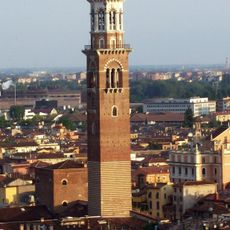
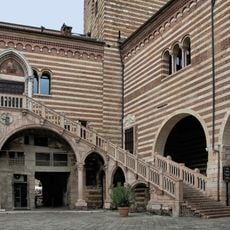
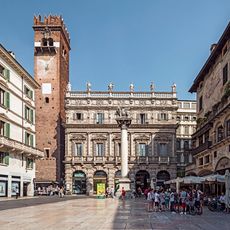
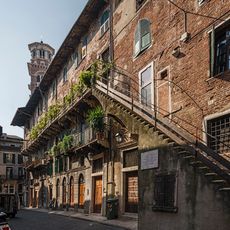
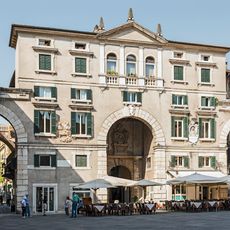
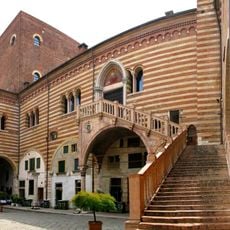
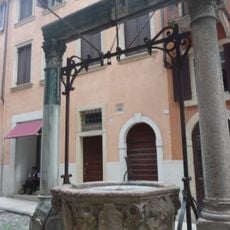
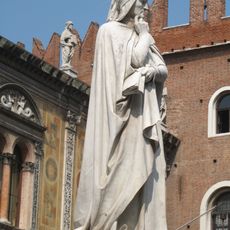
Capitolium, Roman temple ruins in Piazza delle Erbe, Italy
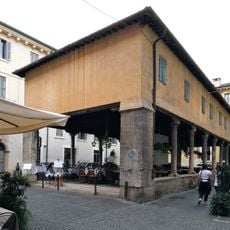
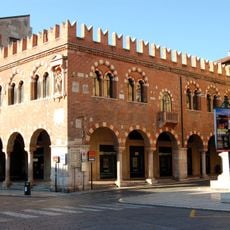
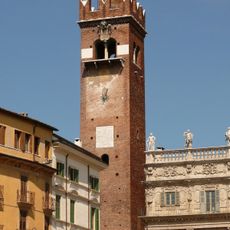
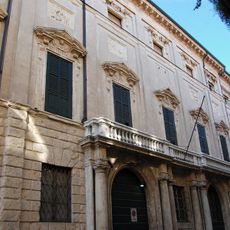
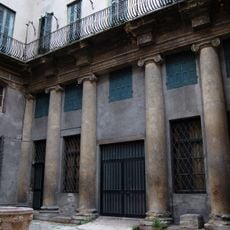
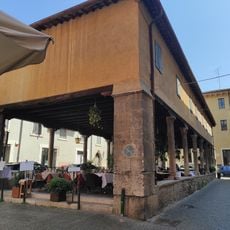
The Capitolium in Verona is a Roman temple with three chambers arranged behind a columned front, its foundations buried well below today's street level. The remains can be seen today in the basements of Palazzo Maffei and beneath the loggia of Corte Sgarzerie.
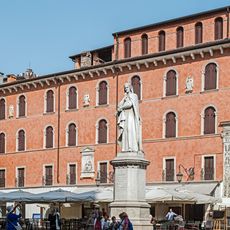
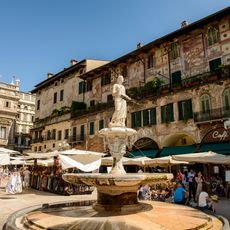
The Capitolium complex was completed in 20 BC to mark Verona's elevation to Roman municipium status, on a site corresponding to today's Piazza delle Erbe. An inscription records that Marcus Magius built the cryptoporticus and rebuilt the portico at his own expense; the temple's patron is unknown, possibly senators linked to Rome or Gaius Julius Caesar. A Domitian sestertius of 95 AD marks a wall repair, and a 379-380 inscription records a bronze statue moved from the temple to the Forum.
The temple honored Jupiter, Juno, and Minerva, three deities central to Roman faith and civic identity. These three chambers represented how Romans organized their religious beliefs within their most important public structures.
Access to the underground chambers is through courtyards and basements of buildings around Piazza delle Erbe. Wear comfortable shoes since the passages are narrow and the floors can be uneven.
A sestertius of Domitian minted in 95 AD was found deliberately placed in a rebuilt portico wall, perhaps to mark the work or as a talisman; it shows Jupiter, the god to whom the complex was dedicated. A statue base reused for two inscriptions, one honouring a priestess of the deified Plotina, the other a dedication to Jupiter by the city council, shows worship continuing here.
The community of curious travelers
AroundUs brings together thousands of curated places, local tips, and hidden gems, enriched daily by 94,042 contributors worldwide.