Palazzo Domus Nova, A palace in Verona, Italy
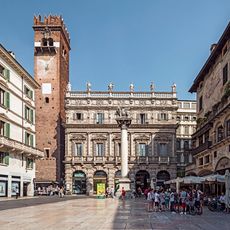
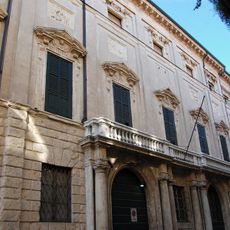
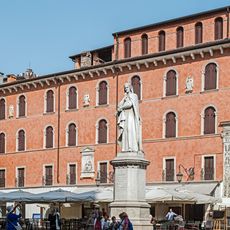
Palazzo Domus Nova, called Domus Nova Communis Verone in the Middle Ages, stands with its main front on Piazza dei Signori and a secondary front on Piazza delle Erbe. It existed by 1254 and was remodelled in 1277 under the Della Scala. Its pale stone facade has a wide round-arched central portal, a large sculpted coat of arms above it, and rows of shuttered windows, some with balustraded balconies; the top ends in a triangular pediment with three pinnacles.
Documented as the Domus Nova Communis Verone by 1254, the palace was remodelled in 1277 during the Della Scala redevelopment of Piazza Erbe. It housed the podestà's lodgings and offices and hosted minor councils, including the Council of the Twelve Wise Men under Visconti rule. After Verona joined the Venetian Republic it lodged foreign assessor judges, hence the name palazzo dei Giudici. Partial collapses in 1511 and 1650 preceded the rebuilding of 1660–1663 by Stefano Panizza and Francesco Marchesini, with a storey added in 1731 for the Muselli brothers.
The palace originally served as the residence and workplace of the Podestà, the chief administrator of the city. Later, it became home to judges during Venetian rule, which is why locals still call it the Palace of the Judges.
The palace can only be viewed from the outside, as it is now in private use following restoration work. The best views are from Piazza dei Signori directly, where you can easily see the stone details and arches of the facade.
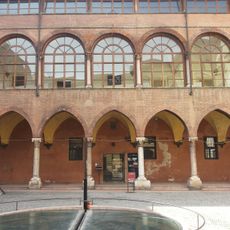
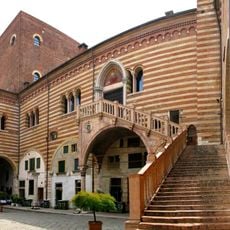
The palace was linked to the older Palazzo del Comune by an elevated footbridge, and a second bridge later joined it to the upper floors of the Mazzanti houses, then the public grain warehouse called Domus Bladorum. In 1619 a marble clock was added to the Piazza dei Signori facade, later removed as the complex decayed.
The community of curious travelers
AroundUs brings together thousands of curated places, local tips, and hidden gems, enriched daily by 93,374 contributors worldwide.