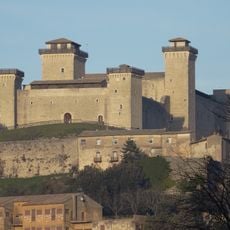
Fortilizio dei Mulini, Medieval tower in Spoleto, Italy.
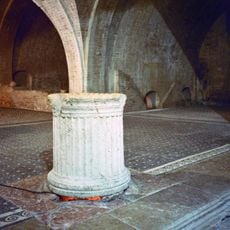
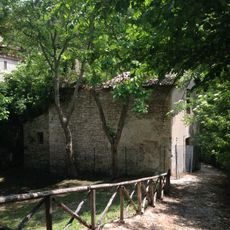
Fortilizio dei Mulini is a medieval tower at the end of Ponte delle Torri bridge, featuring stone walls and a strategic position overlooking the surrounding valley. The structure displays characteristics of both a fortification and a working mill facility, with water intake systems and processing spaces visible throughout.
The construction date is unknown; a fortification may already have guarded the earlier Roman bridge-aqueduct. The building was probably erected or consolidated in the late Middle Ages, when Cardinal Albornoz commissioned works in Spoleto by architect Matteo Gattaponi, who may have designed it. The first written mention dates from 1572, describing Braccio Fortebraccio's failed attempt to seize it in April 1419; he was left lame. Abandoned in the 16th century, it was restored in 1601 by Bishop Fabrizio Perugini.
The building was called "lu mulinu a botte" in the annals of Parruccio Zampolini (1305–1424). A 1601 restoration by Bishop Fabrizio Perugini, lieutenant of Cardinal Cinzio Aldobrandini, is recorded on a plaque on the town hall's south facade. By the early 18th century two mills operated, one for grain above and one for olives below, supervised by the Deputati degli acquedotti.
The building is a dilapidated ruin, unused since the early 20th century and closed to visitors; it is seen from outside, from the Ponte delle Torri and the paths toward Monteluco. The Giro dei condotti and other trails leave from this end of the bridge. A partial consolidation was carried out in 2008, but the structure remains unsafe to enter.
In 1968, artists Christo and Jeanne-Claude wrapped the entire tower in nylon sheets during the Festival of Two Worlds. This temporary installation became famous and showed how this historic site became a canvas for experimental contemporary art.
The community of curious travelers
AroundUs brings together thousands of curated places, local tips, and hidden gems, enriched daily by 94,535 contributors worldwide.