Mesha Stele, Archaeological inscription at Dhiban, Jordan
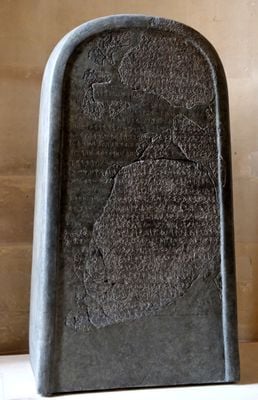
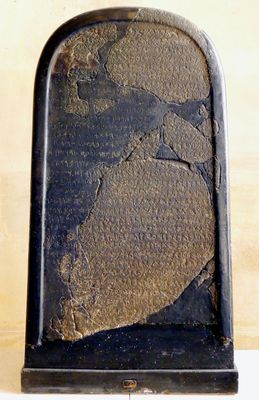
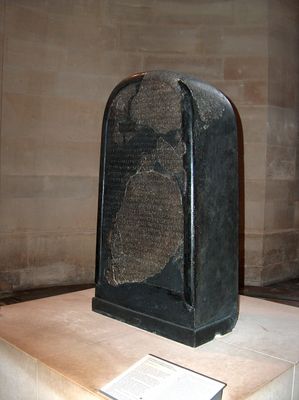
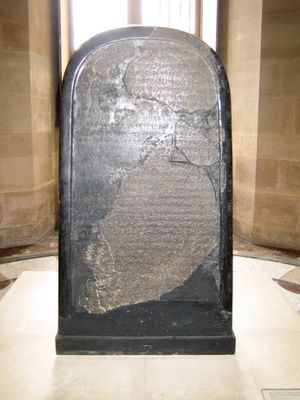
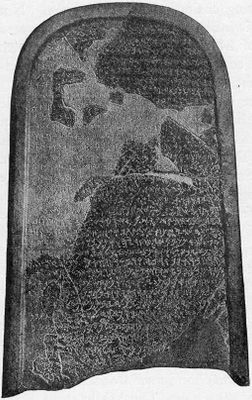
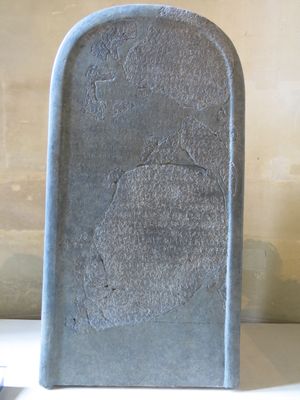
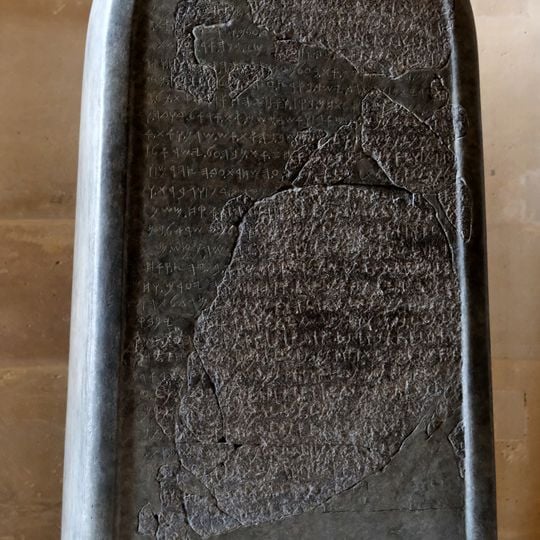
The Mesha Stele is a monumental tablet of dark basalt stone found in the Jordanian settlement of Dhiban, now standing around 100 cm tall. The upper section shows a rounded shape, while the front face is covered with lines of ancient characters once carved with a pointed tool.
The Anglican missionary Frederick Augustus Klein found the intact basalt stele in August 1868 at ancient Dibon, now Dhiban in Jordan. In 1869 the Bani Hamida tribe heated it in a bonfire, threw cold water on it and broke it into fragments to prevent its handover to Germany. Charles Clermont-Ganneau recovered the pieces and reassembled much of the text using a squeeze made beforehand. The inscription, dated around 840 BCE, was commissioned by King Mesha of Moab.
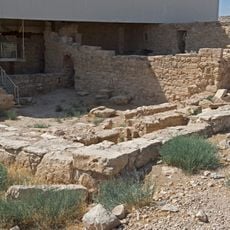
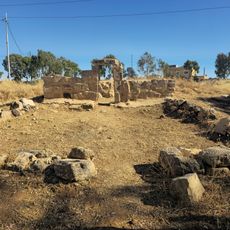
The text is in Moabite, a language close to biblical Hebrew, written in a Phoenician-Paleo-Hebrew alphabet with dots separating words and a vertical stroke between sentences. It is named after King Mesha of Moab, who commissioned it around 840 BCE to record his revolt against Israel. The stele itself is in the Louvre in Paris, not at Dhiban, so the inscription cannot be seen at the discovery site.
The original is displayed at the Louvre in Paris, while replicas can be seen in several Jordanian museums, including Madaba and Karak. Visitors should keep in mind that the piece is only about 60 cm wide and stands in a display case, so getting close helps to make out the characters.
The stele was heated in a bonfire and doused with cold water before being shattered, so the surviving fragments were pieced back together using a papier-mâché squeeze taken just before its destruction. That squeeze was torn into seven pieces while its carrier fled an attack by local Bedouin.
The community of curious travelers
AroundUs brings together thousands of curated places, local tips, and hidden gems, enriched daily by 92,654 contributors worldwide.