Umm ar-Rasas, Archaeological site and UNESCO World Heritage Site near Madaba, Jordan
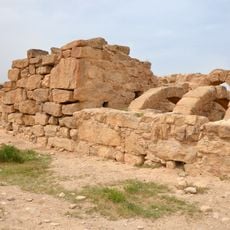
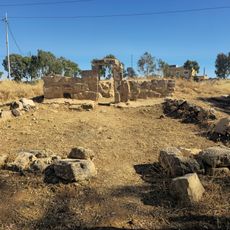
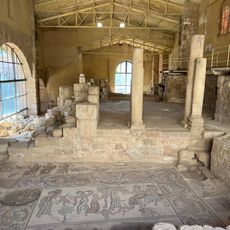
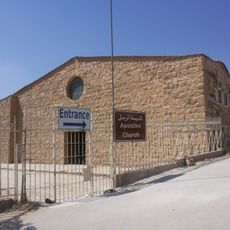
Umm ar-Rasas is an archaeological site 30 km southeast of Madaba, ancient Kastron Mefa'a. Its walled Roman camp, 158 by 139 m, contains four churches, and the mosaic floor of the Church of St Stephen, made in 785, is the largest in Jordan. About 1.6 km north stands a 15 m square stylite tower with carved crosses and no internal staircase.
The site is identified with the biblical Mephaat condemned in Jeremiah 48:21. The Romans established a strategic garrison here, and by the 4th–5th centuries it became an ecclesiastical center with numerous churches. The Church of St Stephen's mosaic, dated 756–785 CE, shows Christian occupation continued under Abbasid rule.
The Church of Saint Stephen's mosaic floor, laid in 785, depicts cities of the region and Egypt, including Jerusalem, Nablus, Caesarea, Gaza, Philadelphia (Amman), Madaba and Alexandria, with Greek labels. Six mosaic masters signed the work: Staurachios from Esbus, Euremios, Elias, Constantinus, Germanus and Abdela. Unlike the Madaba Map, it omits Bethlehem, Hebron and Nazareth.
The site sits about 30 kilometers southeast of Madaba and is accessible by vehicle along clear paths between the ruins; some areas remain partially excavated. Visitors should expect uneven ground and bring water and sun protection, as the area offers little shade.
A single square stylite tower stands about 1.6 km north of the walled ruins, rising 15 metres with no doors or internal staircase. Carved Christian symbols ornament all four sides, and a small room sits at the top where an ascetic lived in isolation. Birds now nest in the structure.
The community of curious travelers
AroundUs brings together thousands of curated places, local tips, and hidden gems, enriched daily by 93,109 contributors worldwide.