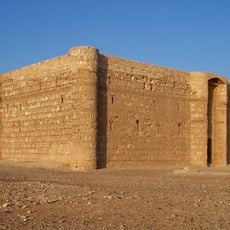
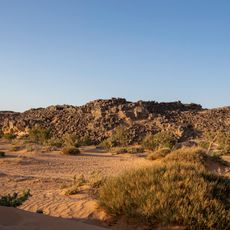
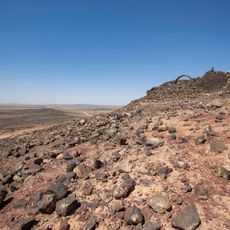
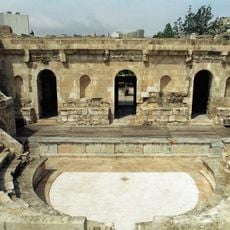
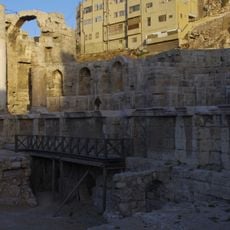
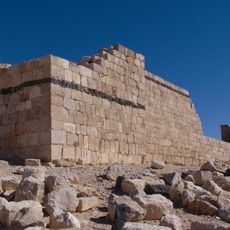
Qasr Amra, Desert palace in Eastern desert of Az Zarqa, Jordan.
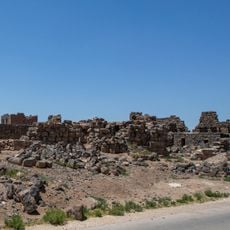
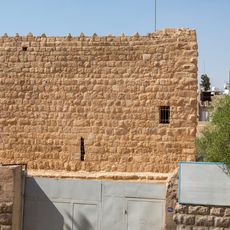
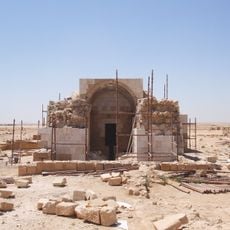
Qasr Amra is a low limestone and basalt building, the remnant of a larger complex with a rectangular audience hall and a bathhouse of three chambers. Its northern block has a triple-vaulted ceiling over the main entrance, and the western wings carry smaller vaults and domes. Rough masonry held by gypsum-lime mortar follows a Sasanian building tradition.
Built between 723 and 743 by Walid ibn Yazid, the future Umayyad caliph Walid II, Qusayr 'Amra was part of a larger complex with a castle and bathhouse. It was rediscovered in 1898 by Alois Musil and made a UNESCO World Heritage Site in 1985.
The walls display fresco paintings depicting hunting scenes, daily activities, and portraits, with inscriptions in Greek and Arabic throughout. These artworks reveal how the ruling class lived and what they valued during the Umayyad period.
The site is located roughly 85 kilometers from Amman and accessible via Route 40 highway. Visitors should bring appropriate clothing for the heat and plan timing in advance, as the location lies in an isolated desert area.
The caldarium ceiling features one of the earliest known celestial maps painted on a dome, depicting the northern hemisphere sky. This astronomical depiction is noteworthy because it reveals that such knowledge existed during this early period.
The community of curious travelers
AroundUs brings together thousands of curated places, local tips, and hidden gems, enriched daily by 94,155 contributors worldwide.