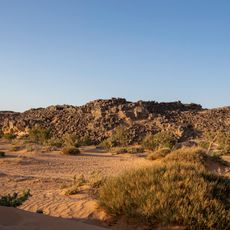
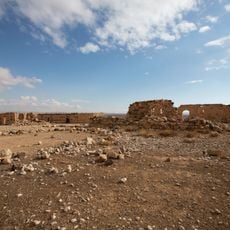
Qasr Tuba, Umayyad desert castle in Amman Governorate, Jordan.
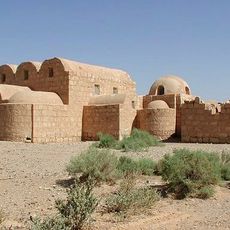
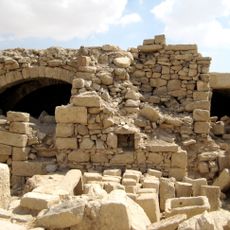
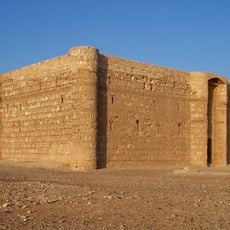
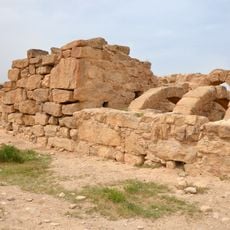
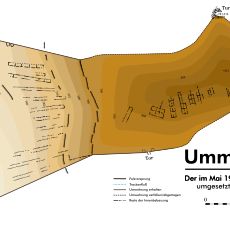
Qasr Tuba is an unfinished Umayyad qasr whose surviving west wing shows an oblong enclosure of 140 by 72 metres, planned as two symmetrical courtyards each with its own north gateway. Semi-round towers brace the walls, except at the two north entrances, flanked by square rooms. Walls are ashlar masonry with baked brick and barrel vaults; lintels carry rosettes and plant leaves.
Construction began in 743 CE under Caliph al-Walid II, who commissioned it for his sons al-Hakam and Uthman. The project was abandoned after his assassination and remained unfinished.
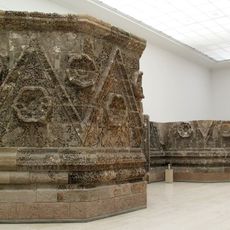
The lintels carry rosettes intertwined with plant leaves, carved so finely that the stonework resembles lace. The site was brought to scholarly attention by the Czech explorer Alois Musil, who visited it in 1896. Its isolated desert setting, near wells and a dry wadi, kept it outside the usual travel circuit.
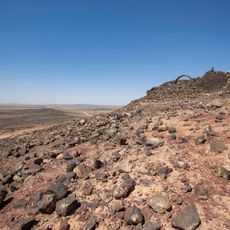
The site is located about 110 kilometers southeast of Amman and is best reached by private transport through desert terrain. Being remote, visitors should bring plenty of water, sun protection, and allow several hours to explore the ruins at a comfortable pace.
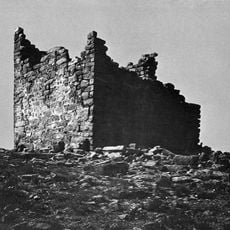
Qasr Tuba was first brought to scholarly attention by the Czech explorer Alois Musil, who visited the site in 1896. The unfinished state he found is itself the record: construction stopped during the Umayyad period, leaving foundations and walls that show how the builders planned before they built.
The community of curious travelers
AroundUs brings together thousands of curated places, local tips, and hidden gems, enriched daily by 94,159 contributors worldwide.