Jabal Umm Fruth Bridge, Natural arch in Wadi Rum, Jordan
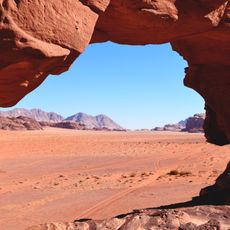
Jabal Umm Fruth Bridge is one of several natural rock bridges in the Wadi Rum area of southern Jordan. It has a spectacular drop on both sides and is a popular destination for visitors touring the valley.
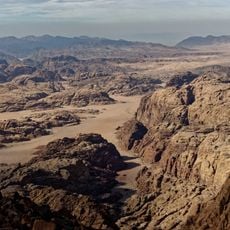
The arch is one of several natural rock bridges in the Wadi Rum area, cut from the iron-rich Umm Ishrin Sandstone that forms the valley's near-vertical walls. Wind and flash floods, which occur almost only during thunderstorms, carved the opening and continue to alter the rock. The wider valley was inhabited from prehistoric times; the Nabataeans and other cultures left petroglyphs, inscriptions and temple ruins, and the area lay within the Kingdom of Edom between the 13th and 6th centuries BCE.
The Zalabieh Bedouin, who settled in Wadi Rum around 1980, make up most of the village's several hundred inhabitants and guide visitors through the area. Their name for the desert, badiya, comes from the Arabic root bad'a, meaning clear or obvious. The camel remains their favoured animal, a symbol of male pride, and camel racing is a serious sport used to establish standing within the community.
Jabal Umm Fruth Bridge lies among the sandstone massifs of the Wadi Rum Protected Area, reached by 4x4 with a Bedouin guide from Wadi Rum village or from the Desert Patrol headquarters there. The final approach is on foot over open sand and rock slabs, so sturdy shoes and water carried from the village are needed; there is no shade at the arch.
Jabal Umm Fruth Bridge is one of several rock bridges in the Wadi Rum area, and the Norwegian Wikipedia entry on it notes a spectacular drop on both sides. It sits within the Wadi Rum Protected Area, which has been a UNESCO World Heritage site since 2011.
The community of curious travelers
AroundUs brings together thousands of curated places, local tips, and hidden gems, enriched daily by 93,111 contributors worldwide.