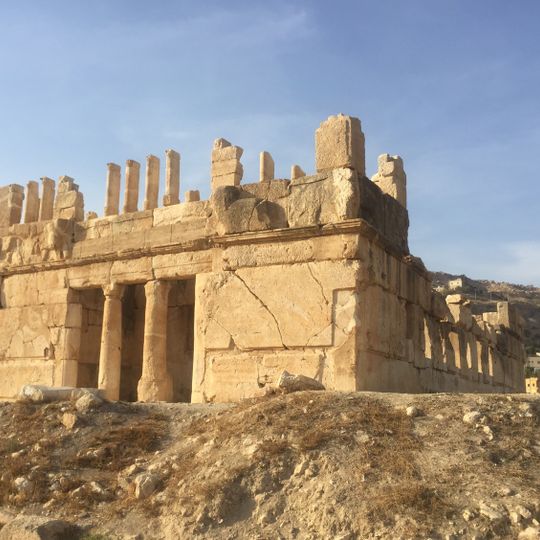
Qasr al Abd, Hellenistic palace in Iraq al-Amir, Jordan
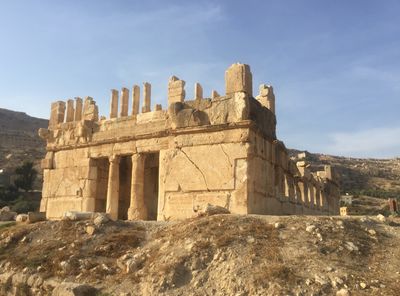
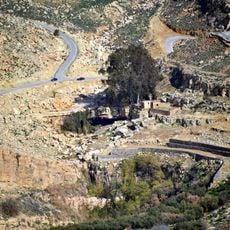
Qasr al-Abd is a two-storey Hellenistic stone palace measuring about 40 by 20 metres and 13 metres high, with a lower floor used for storage and guard halls. Its walls carry carved lions and tigers, and an unfinished upper storey and incomplete columns remain. A large reflecting pool once surrounded the building.
Qasr al-Abd was built in the first quarter of the 2nd century BCE, between 187 and 175 BCE, by Hyrcanus, head of the Tobiad family and governor of Ammon. After losing a power struggle in Jerusalem, he settled east of the Jordan. Fearing revenge from the Seleucid king Antiochus Epiphanes, he took his own life in 175 BCE; the palace was unfinished and was seized by Antiochus.
The name Qasr al-Abd means "Castle of the Servant", possibly referring to Hyrcanus as governor, or to the biblical "Toviyya the Servant" (Neh. 2:10). A local Arab legend says Tobias was a commoner who built the castle to win a nobleman's daughter, then was killed. Carved lions and tigers remain on the walls, and Aramaic inscriptions reading "Tobiah" are cut into rock-cut halls north of the palace.
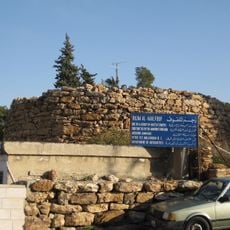
The site is located roughly 20 kilometers west of Amman's First Circle and is open to visitors with regular hours. Information panels on site explain the history and structure, helping you understand the details and what you are seeing.
The structure uses some of the largest stone blocks in ancient Middle Eastern architecture, with individual stones reaching up to seven meters long. These massive blocks show the technical skill and resources of the family that funded the project.
The community of curious travelers
AroundUs brings together thousands of curated places, local tips, and hidden gems, enriched daily by 93,784 contributors worldwide.