Futai-ji Temple, Buddhist temple in Nara, Japan.
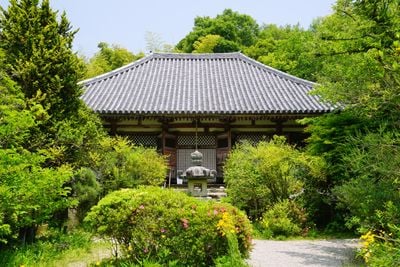
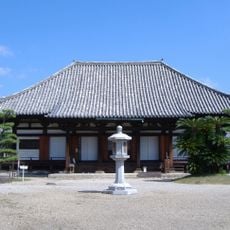
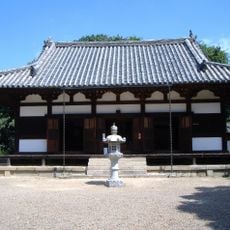
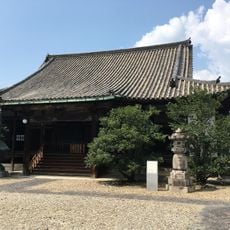
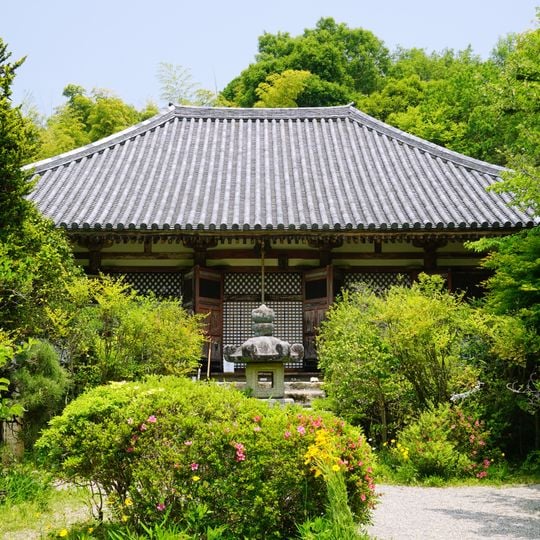
Futai-ji is a Shingon Ritsu temple in Nara's Hōren-chō district. Its main hall, built in the late Kamakura period, has a hipped roof of dark gray tiles and a facade divided by wooden posts into bays with white walls and lattice panels. The hall houses a standing Shō-kannon statue, flanked by five Myō-ō figures.
The temple was founded in 847 when a member of the imperial family converted a former residence into a religious site. This transformation shows how important families during the Heian period turned their estates into spiritual centers.
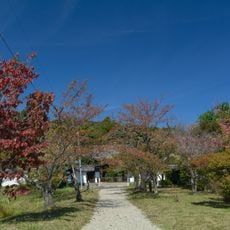
The temple is also called Narihira-dera after its founder, the poet Ariwara no Narihira, who is credited with carving the main Shō-kannon image himself. The grounds are planted with forsythia, camellias, irises and chrysanthemums, with red maple and nandina in late autumn. The main hall holds a wooden Shō-kannon with two ribbon-like ornaments on its head, and five Myō-ō whose faces and poses are unusually gentle.
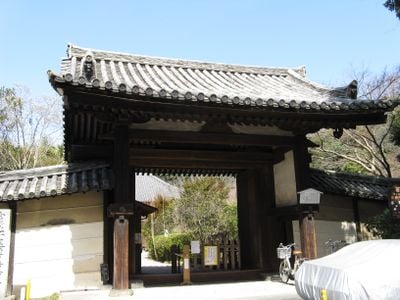
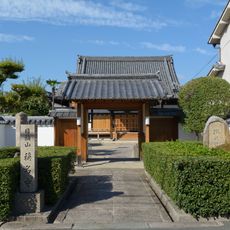
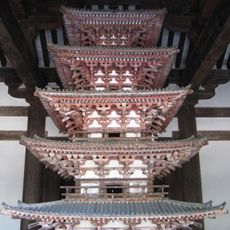
Futai-ji lies in the Hōren-chō district north of central Nara. From Kintetsu Shin-Ōmiya Station it is about 1 km, a 13-minute walk; buses from JR Nara or Kintetsu Nara stop at Ichijō Kōkō-mae (Futai-ji-guchi), 7 minutes on foot. The main hall, the roofless two-tier pagoda base and the 1317 south gate stand close together, so the grounds take little time to cross.
The main hall's Shō-kannon is traditionally said to have been carved by Narihira himself, though its style points to the 10th–11th century. It is a single-block carving in bright polychrome, and its head carries two ribbon-like attachments, an unusual feature. A wooden Shō-kannon kept by the Agency for Cultural Affairs is thought to have once formed a pair with it.
The community of curious travelers
AroundUs brings together thousands of curated places, local tips, and hidden gems, enriched daily by 93,232 contributors worldwide.