Tachibana Castle, Mountain fortress in Fukuoka Prefecture, Japan
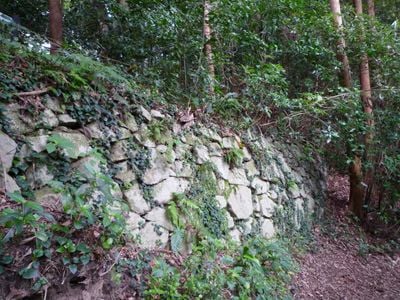
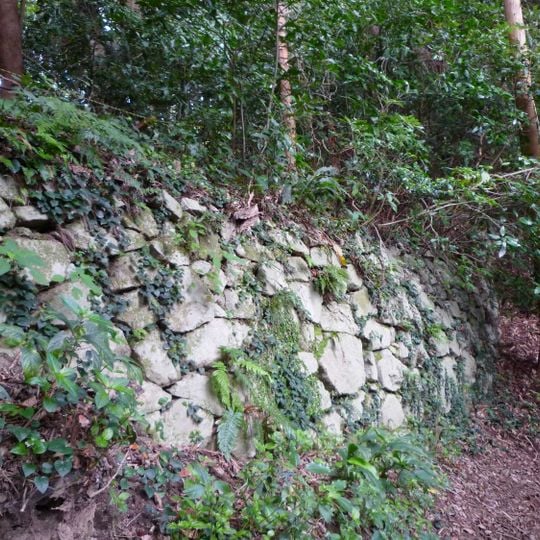
Tachibana Castle is a mountain castle spread across the seven peaks of Mount Tachibana, with the main keep on the 367 m Seirōyama summit. The central peak has a roughly 100 m bailey complex with a three-tiered, zigzagging gate, and stone walls and earthen ramparts survive at the saddle between Seirōyama and Matsuo Peak. A moss-covered stone retaining wall runs along the foot of the wooded slope.
Ōtomo Sadanori, second son of the Constable of Bungo, built the castle in 1330 and took the name Tachibana. It was contested by the Ōtomo, Ōuchi and Mōri, and in 1586 Tachibana Muneshige, then 20, held it against a Shimazu army of about 40,000. After the Kyūshū campaign the Tachibana moved to Yanagawa and Kobayakawa Takakage took over; the castle was abandoned after Kuroda Nagamasa built Fukuoka Castle in 1601, its stones reused there.
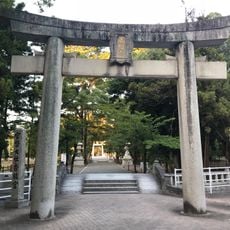
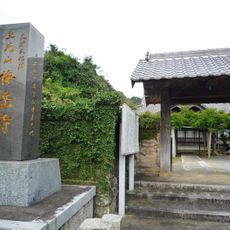
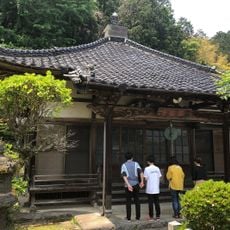
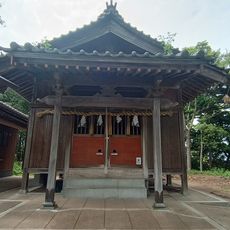
The name Tachibana comes from the shikimi trees the monk Saichō is said to have brought back from Tang China in 805 and planted by a rock on the mountain, where they grew straight and flowered abundantly. The mountain is also called Futagami-yama, after the creator deities Izanagi and Izanami, who were believed to dwell there. At the trailhead stands a stone monument inscribed "Tachibana-jō Hino-yama Shinjin", and the Rokusho Shrine, where Tachibana Dōsetsu prayed for victory before battles, with the Baigaku-ji cemetery of Dōsetsu, his stepmother Yōkō-in and retainer Komeno Masutoki behind it.
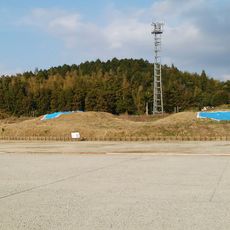
The ruins lie on the 367 m summit of Mount Tachibana, spread across a group of peaks about 1 km across; the main enclosure is on Seirōyama, with outworks on Matsuo-dake (337 m) and Shiratake (314 m). Trails climb from the foot of the wooded slope, where a low mossy stone wall lines the path. Only traces of stone walls and an old well remain at the honmaru, so allow time to walk between the ridges.
Some of the stone walls from this site were dismantled and reused to construct another fortress in the region. This repurposing reveals how medieval ruins often provided building materials for later projects rather than standing as permanent monuments.
The community of curious travelers
AroundUs brings together thousands of curated places, local tips, and hidden gems, enriched daily by 94,678 contributors worldwide.