Yabakei, Geological formation in Nakatsu, Japan
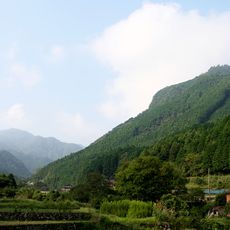
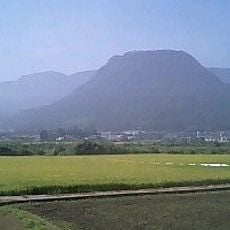
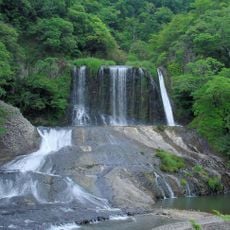
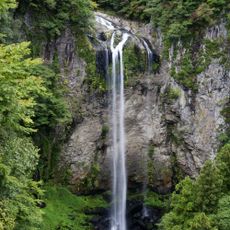
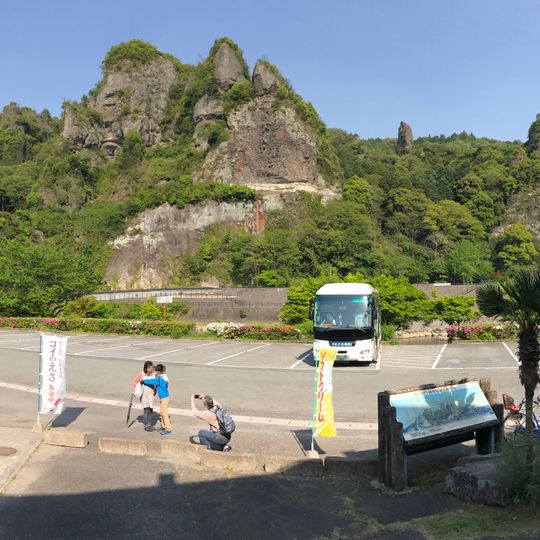
Yabakei is a valley along the upper and middle reaches of the Yamakuni River and its tributaries in Nakatsu, Oita Prefecture. Its cliffs and pinnacles are eroded from tuff, tuff breccia and lava of Quaternary volcanic activity, with caves formed by wind and river erosion. The steep pale grey and tan rock faces are topped and split by dense green vegetation.
The gorge was carved by the Yamakuni River and its tributaries into a plateau of tuff, tuff breccia and lava from Quaternary volcanic activity. In 1818 the scholar Rai Sanyo visited the Sekihitsu Peak area and gave the valley its name in a Chinese poem. It was named one of Japan's New Three Views in 1916, designated a Place of Scenic Beauty in 1923, and included in Yaba-Hita-Hikosan Quasi-National Park in 1950.
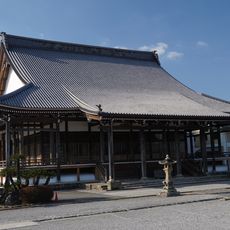
The name Yabakei comes from Rai Sanyo, who visited in 1818 and wrote the Chinese poem line "Yabakei, unparalleled in the world"; the name was later applied to the surrounding valleys. The Zenkai tunnel at Hon-Yabakei, dug by the Rakanji abbot, became known nationwide through Kikuchi Kan's novel "Beyond Gratitude and Resentment".
Access is available through several entry points reachable by public transport from Nakatsu. Sturdy footwear is advisable for the uneven paths along the rock walls and through forested sections.
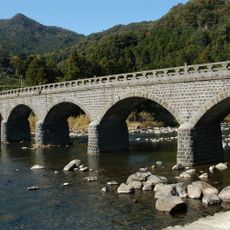
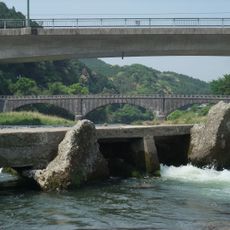
At the Ichimoku Hakkei viewpoint in Shin-Yabakei, eight named rock formations can be seen at once: Kaimine, Sennin-iwa, Shoen-zan, Meoto-iwa, Gunzaru-zan, Eboshi-iwa, Oshika Nagao-mine and Washi-no-su-zan. The name means "eight views at a glance". The Yabakei Bridge, 116 m long with eight arches, is called the Dutch Bridge and is a designated Important Cultural Property.
The community of curious travelers
AroundUs brings together thousands of curated places, local tips, and hidden gems, enriched daily by 93,964 contributors worldwide.