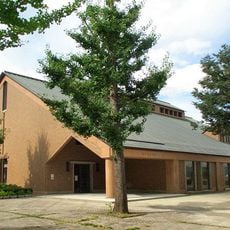
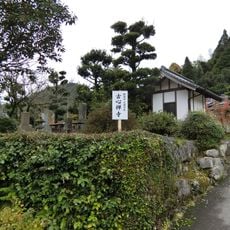
Hikosan Jingū, Shinto shrine in Soeda, Japan
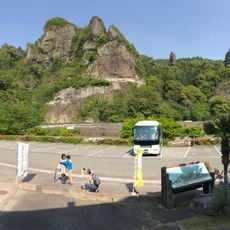
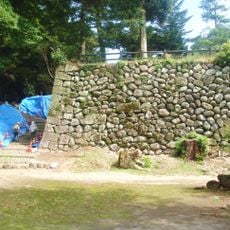
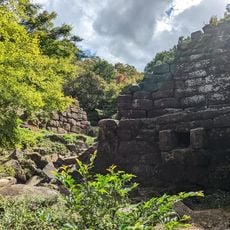
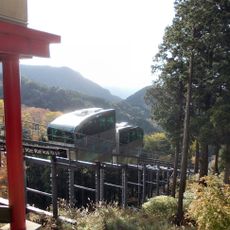
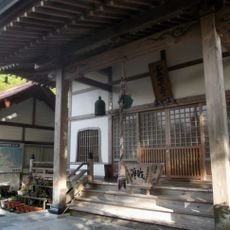
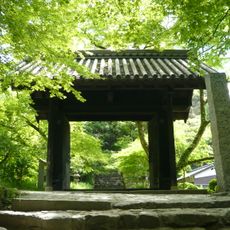
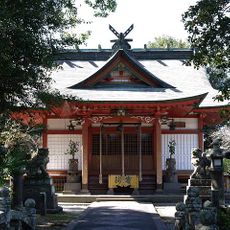
Hikosan Jingū is a jingū on Mount Hiko in Soeda, Japan, made up of several wooden buildings with curved roofs linked by stone steps and pathways. The complex includes gate structures, prayer halls and auxiliary buildings scattered across different levels of the mountain among old cedar and pine trees.
Tradition credits the monk Zenshō with founding the sanctuary in 531, when the hunter Kyūyū became his disciple after a white deer he had shot revived. From the 12th century it flourished as a centre of Shugendō under the name Hikosan Gongen Reisen-ji, with the Tendai monk Chōsuke entering as head in 1333. In 1616 Hosokawa Tadaoki rebuilt the honden, and in 1729 Emperor Reigen granted the character 英, making it Hikosan. The temple was dissolved in the Meiji separation of Buddhism and Shinto, becoming Hikosan Shrine in 1871 and Hikosan Jingū in 1975.
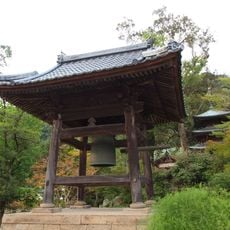
The name connects mountain nature with divine worship, and visitors today still place incense and paper strips as offerings before the altars. Worshippers pull a thick rope to ring the bell and attract the attention of the revered deities.
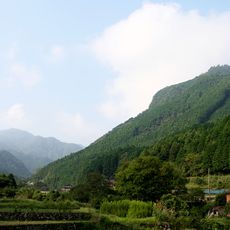
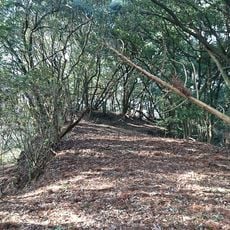
From Hikosan Station on the JR Kyushu Hita-Hikosan Line, a Soeda town bus toward Hikosan takes about 15 minutes to the "Dō no Torii" stop. By car, the site is 45 km from the Kogura-minami Interchange on the Kyushu Expressway and 37 km from the Yukuhashi Interchange on the Higashikyushu Expressway. The sanctuary lies on the slopes of Mount Hiko, whose main peak, Minamidake, reaches 1,199 m.
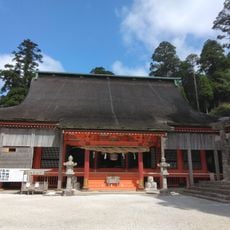
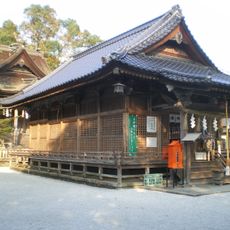
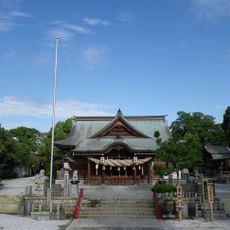
The Hōhei-den, rebuilt in 1616 by Hosokawa Tadaoki, lord of Kokura, was originally the great lecture hall of Reisen-ji, the temple at the head of Kyushu's mountain ascetics. It is a single-storey irimoya-roofed building covered in kokerabuki shingles, designated an Important Cultural Property in 1907, and its ridge tags record the reconstruction.
The community of curious travelers
AroundUs brings together thousands of curated places, local tips, and hidden gems, enriched daily by 93,445 contributors worldwide.