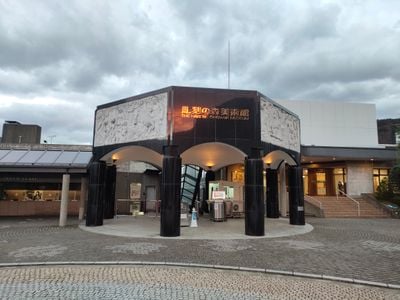
Hakone Open-Air Museum, Open-air museum and sculpture garden in Hakone, Japan.
The Hakone Open-Air Museum is an open-air museum and sculpture garden in Ninotaira, Japan. The site spreads across 17 acres (70,000 square meters) and displays over 120 permanent works by artists from around the world, set among hills and trees.
The museum opened on 6 September 1969 as Japan's first open-air museum, designed by the sculptor Bukichi Inoue; its first director was Nobutaka Shikanai, chairman of the Fujisankei Group. On 15 March 1972 the Hakone Tozan Railway's Ninotaira Station was renamed Chokoku-no-Mori Station after the museum. Hanae Mori became director in July 2012, and the Picasso Pavilion reopened after a full renewal on 27 July 2019 for the museum's 50th anniversary.
The complex includes a small park with playgrounds made of colorful sculptures where children can climb and run. Families often spend a whole day here, combining art with outdoor activity.
The museum is two minutes on foot from Chokoku-no-Mori Station and opens daily from 9 AM to 5 PM. The paths are flat and wheelchair accessible, and there are several covered areas for resting along the way.
A foot bath with natural hot spring water invites visitors to rest their feet while observing the sculptures around them. The water comes directly from Hakone's hot springs, which have been known in the region for centuries.
The community of curious travelers
AroundUs brings together thousands of curated places, local tips, and hidden gems, enriched daily by 93,132 contributors worldwide.