Port of Tokyo, Maritime port in Tokyo, Japan
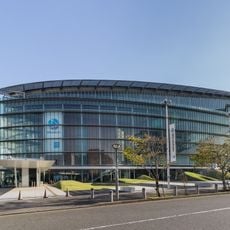
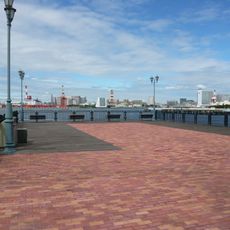
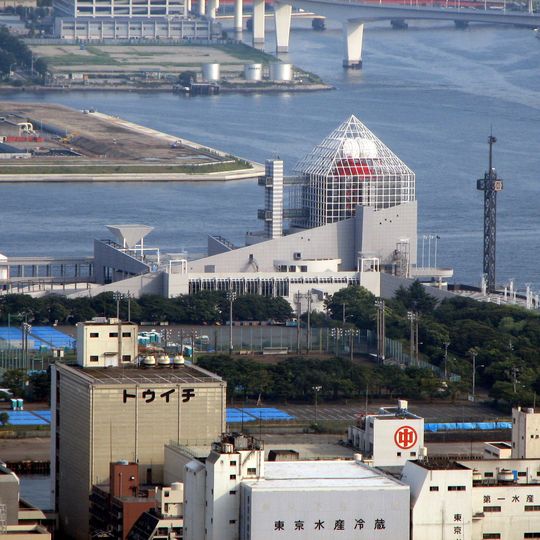
The Port of Tokyo spreads across Tokyo Bay in wards including Koto, Chuo, Minato, Shinagawa and Ota. Its container terminals are Oi, with seven berths and 20 gantry cranes, Aomi with five berths, and Shinagawa, opened in 1967 as Japan's oldest container terminal. The photograph shows the glass-domed Fuji TV building and the white quay buildings of Odaiba.
Edo Port long supplied goods to the city but was barred from foreign trade while neighbouring Yokohama was open. After the 1923 Kanto earthquake, construction of terminals began: Hinode was completed in 1925, followed by Shibaura and Takeshiba, and the port finally opened to international trade on 20 May 1941. In 1967 Shinagawa became Japan's first container terminal.
The Takeshiba pier is the departure point for ferries to the Izu Islands and the Ogasawara Islands, while Hinode pier serves water buses to Asakusa and Odaiba and Tokyo Bay cruises. The warehouses at Hinode, built in 1925, are the oldest in the port and are lit up at night.
Cruise ships now dock at the Tokyo International Cruise Terminal in Aomi, which opened on 10 September 2020; the older Harumi terminal closed on 20 February 2022. Domestic island ferries leave from Takeshiba Pier, and water buses to Asakusa and Odaiba depart from Hinode Pier, where the Hi-NODE waiting hall, shops and a second-floor canteen opened in 2019.
The 1925 Hinode pier, Tokyo's first, still has its original 1925 warehouses, the oldest in the port; they are lit up at night for sightseeing boats. The pier also serves as a disaster-response water transport base for stranded commuters and relief supplies.
The community of curious travelers
AroundUs brings together thousands of curated places, local tips, and hidden gems, enriched daily by 93,180 contributors worldwide.