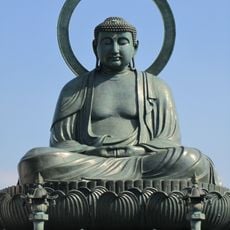
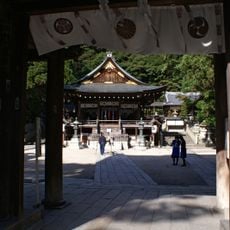
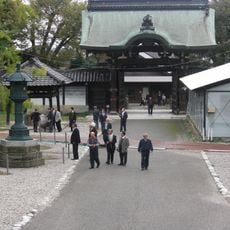
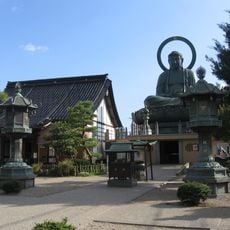
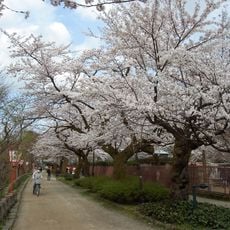
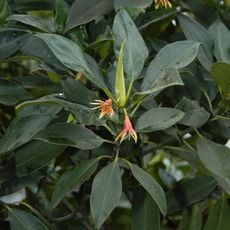
Kokutai-ji, Buddhist temple in Takaoka, Japan.
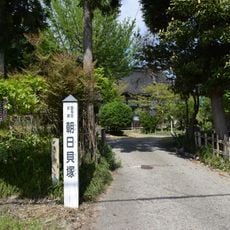
Kokutai-ji is a Buddhist temple in Takaoka built with wooden structures that follow traditional Japanese design principles. The grounds contain gardens and pathways that divide the space into different areas, making it easy for visitors to walk through and experience the layout naturally.
The temple began as a thatched hermitage on Mount Nijo, where the monk Jiun Myoi settled in 1296. In 1304 it became Tosho-ji, and in 1328 Emperor Go-Daigo granted it the name Kokutai-ji. It was burned during the Sengoku wars around Mount Nijo and later rebuilt with support from the Jinbo clan. In 1585 Maeda Toshiie confiscated its abbot's quarters for use in Moriyama Castle.
The temple keeps its Fuke sect past alive: on the memorial days of founder Jiun Myoi (June 2–3) and his teacher Hotto Kokushi (November 12–13), komuso monks from across Japan attend and offer shakuhachi flute performances. Kokutai-ji heads the Komuso Myoon-kai, and Rinzai monks still dress as komuso for these rites. On May 8, Hana Matsuri celebrates the Buddha's birth with sweet tea poured over a statue.
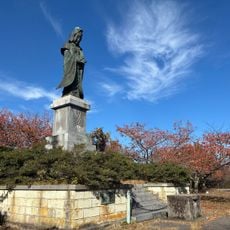
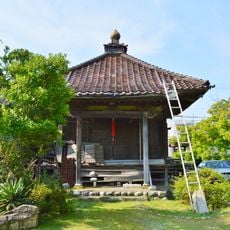
Kokutai-ji stands on the slope of Mount Nijo, and its halls are reached by walking paths and steps through the temple grounds. The main buildings, including the great hall and the Buddha hall, are grouped close together, while the three-storey founder's hall and the 1981 relief tower stand further apart. Allow time to walk between them.
This place is one of fourteen independent branches of the Rinzai school and maintains historical links to wandering monks who wore basket hats. This connection to an itinerant tradition makes it a rare example of a nearly forgotten religious practice.
The community of curious travelers
AroundUs brings together thousands of curated places, local tips, and hidden gems, enriched daily by 93,690 contributors worldwide.