Mount Norikura, Volcanic mountain in Nagano and Gifu, Japan
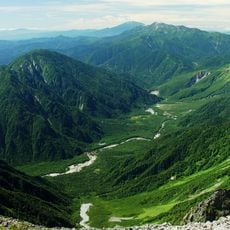
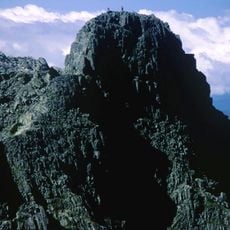
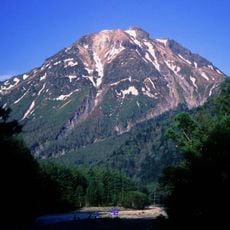
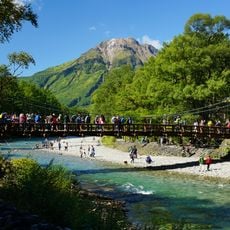
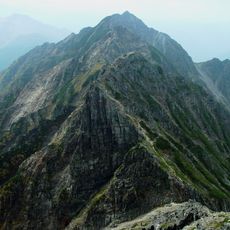
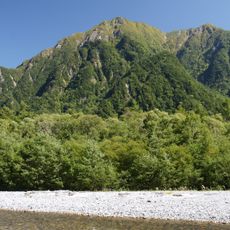
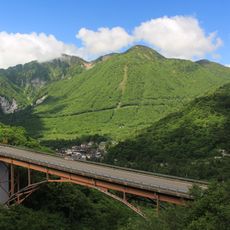
Mount Norikura is a stratovolcano on the Gifu–Nagano border whose highest summit, Kengamine, rises 3,026 m. It is Japan's third-tallest volcano after Mount Fuji and Mount Ontake, built from overlapping cones including the older Sencho and Eboshi bodies and the newer Gongen Pond–Takamagahara body. Its broad top holds 23 peaks and 12 crater lakes, among them the cobalt-blue Gongen Pond just west of the summit.
A Buddhist monk named Enkū climbed the mountain for the first time in the 1680s, when religious travelers sought out these peaks. William Gowland arrived in 1878 as the first Western visitor and documented the volcano's geological structure for scientific study.
The name Norikura comes from the saddle-like profile seen from the Hida side; the mountain was called Abō-yama in 873 and Kuraiyama in old songs before the current name took hold around 1645. Enkū is credited with naming and opening Maō-dake and Marishiten-dake, and the summit's highest peak, Kengamine, is also called Gongen-dake. The mountain is listed among the 100 Famous Japanese Mountains.
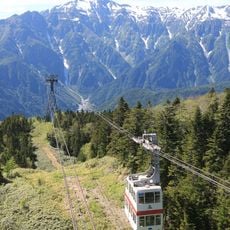
Buses bring visitors up to the Norikura Bus Terminal at 2700 meters, as private cars are not allowed on the mountain road. From there, marked trails lead to the summit, requiring about two to three hours of walking depending on fitness.
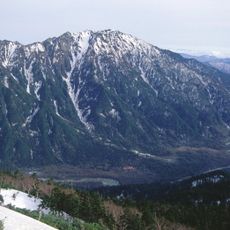
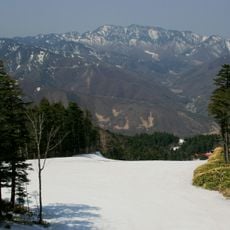
Snow fields on the northeastern slopes often remain into the summer months and allow skiing when most Japanese ski resorts have already closed. These natural snow runs attract skiers who want to ride on real snow even in June or July.
The community of curious travelers
AroundUs brings together thousands of curated places, local tips, and hidden gems, enriched daily by 92,659 contributors worldwide.