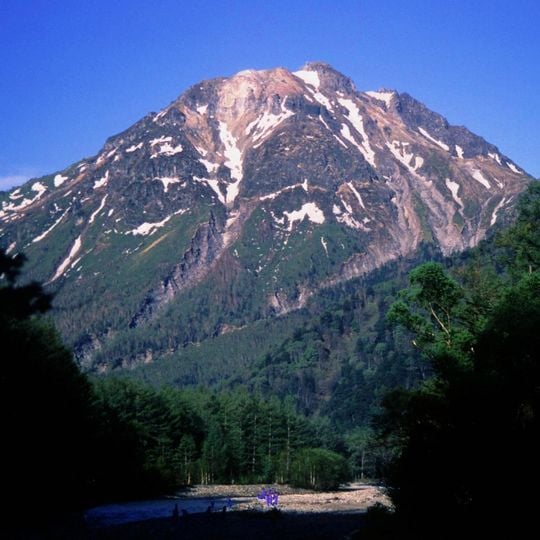
Mount Yake, Active volcano in Nagano Prefecture, Japan
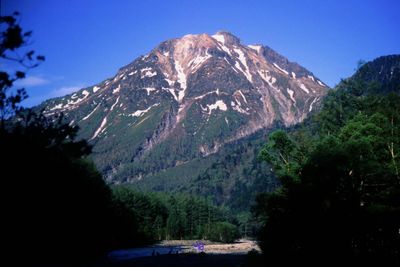
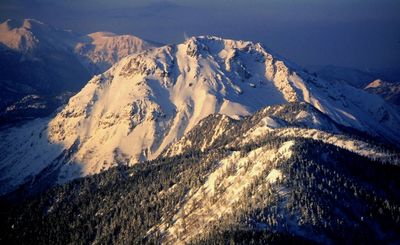
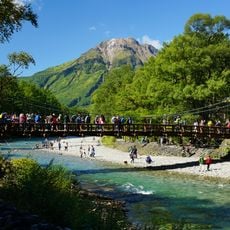
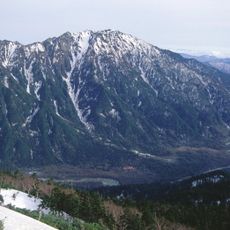
Mount Yake is an active volcano of the Hida Mountains on the Nagano–Gifu border, reaching 2,455 m at its southern peak. Its two summits, the northern at 2,444 m and the southern, enclose a crater lake, and the mountain is a lava dome built of viscous andesite. A fumarole emitting sulfur sits on the western flank of the northern peak.
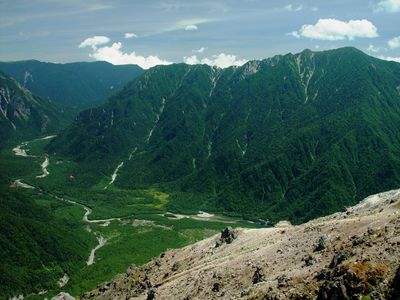
Mount Yake began erupting about 25,000 years ago; its last magma eruption, around 2,300 years ago, produced the Yakedake lava dome and the Nakao pyroclastic flow. Since then all eruptions have been phreatic steam explosions. In June 1915 a major blast sent a mudflow that dammed the Azusa River and formed Lake Taisho. Activity in 1907–1939 and 1962–1963 brought steam explosions and mudflows; the 1962 eruption crushed the old Yakedake Hut and injured four people.
The name Yake-dake means 'Burning Mountain', while Gifu-side residents historically called it Iwo-dake, or Sulfur Peak. The North Peak holds a fumarole emitting sulfur on its western flank, and a crater lake, Shoga-ike, lies between the two summits. The mountain is one of the 100 Famous Japanese Mountains and a constantly monitored volcano.
The northern peak is reachable via marked trails that pass active steam vents, while the southern summit remains off-limits due to unstable ground. Hikers should carry gas masks and check daily hazard warnings before attempting the ascent.
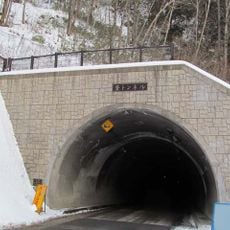
Four construction workers died from volcanic gases in 1995 while building a tunnel on the Nagano side. This event led to stricter safety protocols for all projects near active volcanic zones across the country.
The community of curious travelers
AroundUs brings together thousands of curated places, local tips, and hidden gems, enriched daily by 93,446 contributors worldwide.