Hamarikyu Gardens, Japanese garden in Chuo, Japan
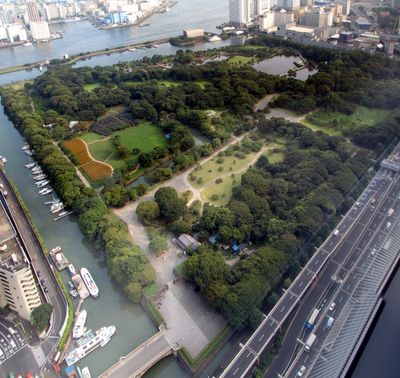
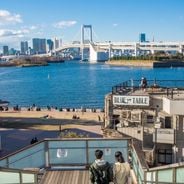
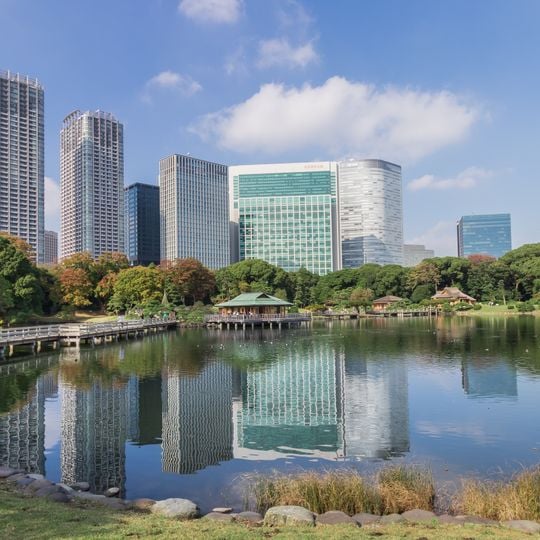
Hama-rikyū Gardens is a 250,216 m² circuit-style garden at the mouth of the Sumida River, built around Shioiri-no-ike, a tidal pond fed with seawater from Tokyo Bay. A teahouse on an island in the pond is reached by two bridges, and a seawater moat surrounds the grounds. A boardwalk runs along one bank, and a low wooden pavilion with a green hipped roof stands on a pier over the water.
The site began in 1654 as a hunting reserve for the Tokugawa family and served as a private retreat for shoguns for over two centuries. After the 1868 restoration the garden passed to the imperial family before the city opened it to the public in 1946.
The name Hama-rikyū ("Hama Detached Palace") dates from 1871, when the garden passed to the Imperial Household Agency; Emperor Meiji received Crown Prince Frederick William of Germany there in 1879, and former US president Ulysses S. Grant stayed a month the same year. At the centre of the tidal pond, a teahouse reached by two bridges serves matcha and Japanese sweets in tea-ceremony style. Falconry and aikido are demonstrated at New Year.
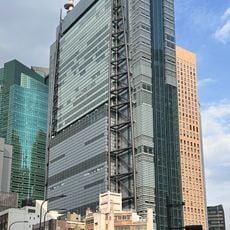
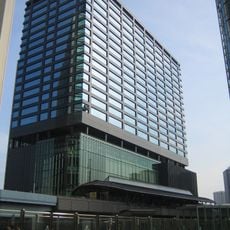
The entrance sits near subway stations and paths are flat and wide enough for wheelchairs or strollers. Mornings offer quieter ponds and afternoons draw more visitors along main routes while teahouses provide seating on request.
The large pond fills with saltwater from the bay and the water level shifts with the tides while fish move between garden and sea. This system is the only one of its kind preserved from the Edo period.
The community of curious travelers
AroundUs brings together thousands of curated places, local tips, and hidden gems, enriched daily by 92,693 contributors worldwide.