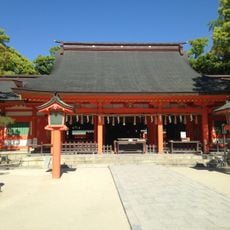
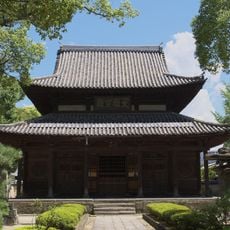
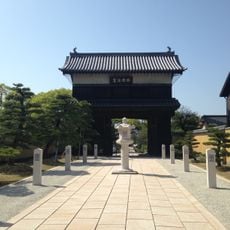
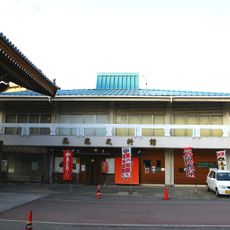
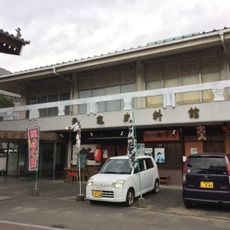
Jōten-ji, Buddhist temple in Hakata, Japan
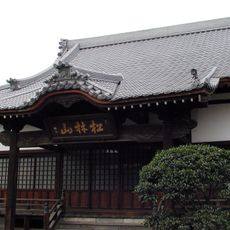
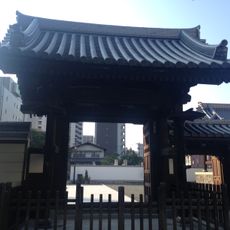
Jōten-ji is a Rinzai temple in Hakata, Fukuoka, with the honorary prefix Banshōsan. Its grounds are split by a city street: the mountain gate and Buddha hall lie southwest, while the main hall and cemetery are northeast. In front of the main hall is the stone garden Sentotei, also called Sentōtei, representing the Genkai-nada Sea with rocks and raked gravel.
Enni-Ben'en returned from China in 1241 and founded Jōten-ji with support from the Chinese merchant Xie Guoming and the local official Mutō Sukeyori; construction was completed in 1242, and the temple became an official temple in 1243. In the 14th century, the Shinan ship carried cargo destined for Jōten-ji from Ningbo to Hakata, as shown by wooden cargo tags recovered from the wreck.
Monk Enni, the first abbot, brought techniques for making udon, soba noodles, and manju from China to this place. These skills shaped local food traditions and show how the temple influenced the region's way of life.
The temple grounds are split by a city street, with the mountain gate and Buddha hall on the southwest side and the main hall and cemetery on the northeast side. From Gion Station on the Fukuoka City Subway it is about a 3-minute walk (250 m); from the Midoribashi bus stop, about 2 minutes (130 m). The Hakata Sennen Gate stands on Jōtenji-dori Avenue.
The Shinan ship, a 14th-century vessel bound from Ningbo to Hakata, carried cargo tagged for a sub-temple of Jōten-ji. After it sank near Korean shores, wooden tablets recovered from the wreck revealed the temple's name in Chinese calligraphy, confirming its role in the Maritime Silk Route trade.
The community of curious travelers
AroundUs brings together thousands of curated places, local tips, and hidden gems, enriched daily by 93,171 contributors worldwide.