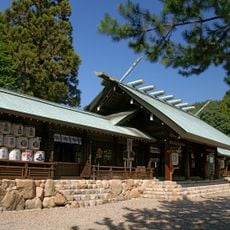
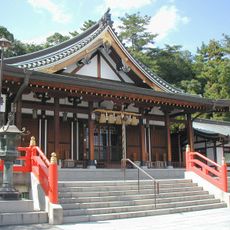
Koshikiiwa Shrine, Shinto shrine in Nishinomiya, Japan
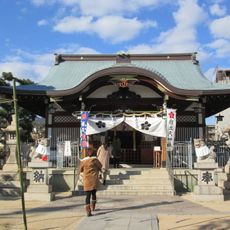
Koshikiiwa Shrine is a Shinto shrine in Nishinomiya whose main object of worship is the Koshiki-iwa, a granite megalith 10 metres high and about 40 metres in circumference, likened to a traditional rice steamer. The rock is venerated as an iwakura, with a second boulder about 50 metres north and a third some 30 metres beyond that. The precinct covers roughly 7,700 square metres and holds an outdoor sumo dohyo and a stage.
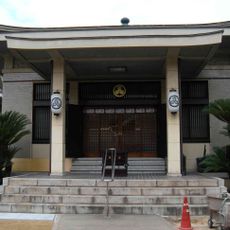
The Engishiki, a Heian-period record of royal ceremonies, lists Ōkuninonushi-Nishi-Jinja, believed to be this shrine's predecessor. It was rebuilt around 1644, and in 1656 the monk Kyōjun enshrined Ebisu from Nishinomiya Shrine. The present inner shrine dates from 1936 and the outer shrine from 1983.
The shrine is also called Ebisu Daijingū, and its main deity, Hiruko Ōkami, was brought from Nishinomiya Shrine in 1656 by the monk Kyōjun. The megalith itself is worshipped as a rock deity (iwakura), with Itsukushima Hime Ōkami also enshrined there. The grounds include an outdoor sumo ring and a stage, possibly used for kagura performances.
The shrine stands at 5-4 Koshikiiwa-cho, Nishinomiya, a short walk from Kurakuenguchi or Koyoen stations on the Hankyu Koyoen Line. The grounds cover about 7,700 square metres, and the megalith sits at the southern end of a chain of rock formations. From Koshiki-iwa, a climb of roughly 50 metres north reaches the second iwakura, and about 30 metres beyond that the third; the slope continues up to Mount Kitayama, about 200 metres high.
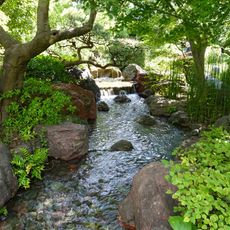
The shrine's forest, about 7,700 m², was designated a Hyōgo Prefecture natural monument in 1974. It is a warm-temperate woodland on a diluvial terrace, dominated by some two hundred-plus himeyuzuriha (Daphniphyllum macropodum), a type of forest rare in the prefecture.
The community of curious travelers
AroundUs brings together thousands of curated places, local tips, and hidden gems, enriched daily by 93,187 contributors worldwide.