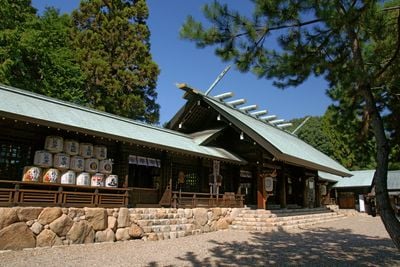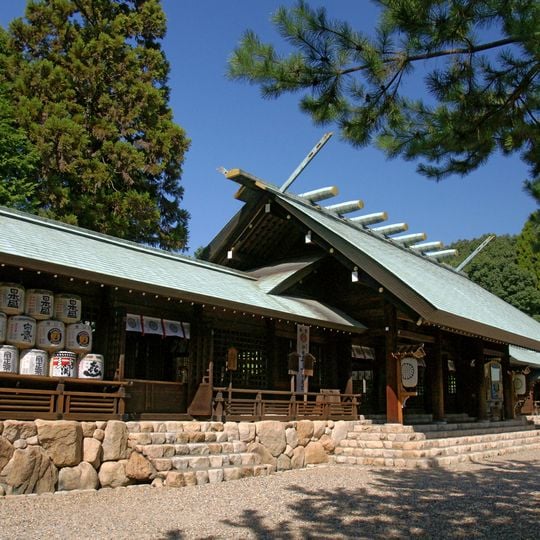
Hirota Shrine, Shinto shrine in Nishinomiya, Japan.
Hirota Shrine is a Shinto shrine in Nishinomiya, Japan. Its low worship hall has dark wooden walls on a stone base and a pale green metal roof, with a long front eave and a taller gabled section projecting forward. Rows of pale sake barrels hang above dark lattice panels, and two round drum-like emblems sit under the right side of the roof.
According to the Nihon Shoki, Empress Jingū founded the shrine in the 3rd century after Amaterasu's oracle directed that her violent spirit be enshrined at Hirota. In 868 it was raised to Junior First Rank, and by the 11th century it was one of the Twenty-Two Shrines under Emperor Shirakawa. The shrine burned in the 1945 Nishinomiya air raid and was moved to its present site after the war; the current main hall dates from 1984.
The name of this place stems from ancient times and connects to Amaterasu, the central deity in Shintoism, who is worshipped here. Believers visit the shrine regularly for prayers and personal concerns, bowing before the wooden altars and leaving offerings.
Buses from Hankyu Nishinomiya-kitaguchi Station run regularly to the shrine, and the ride takes only a few minutes. The grounds can be entered freely, and visitors should pay attention to the gravel paths that require comfortable footwear.
Around 20,000 kobanomitsuba azaleas bloom here in early April and cover the gardens with white and pink blossoms. This plant species bears its name because of the three small leaves on each branch that distinguish it from other azalea varieties.
The community of curious travelers
AroundUs brings together thousands of curated places, local tips, and hidden gems, enriched daily by 94,308 contributors worldwide.