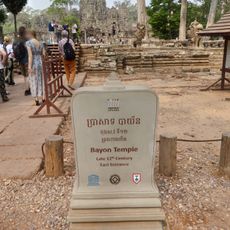
Bayon, Buddhist temple in Angkor Thom, Cambodia
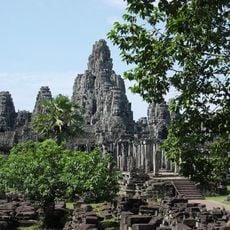
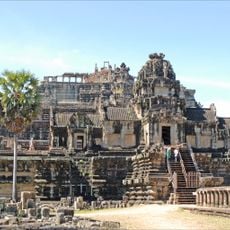
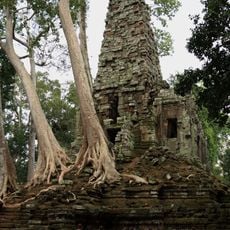
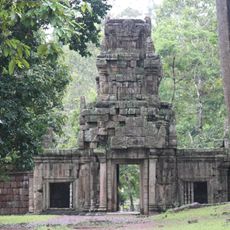
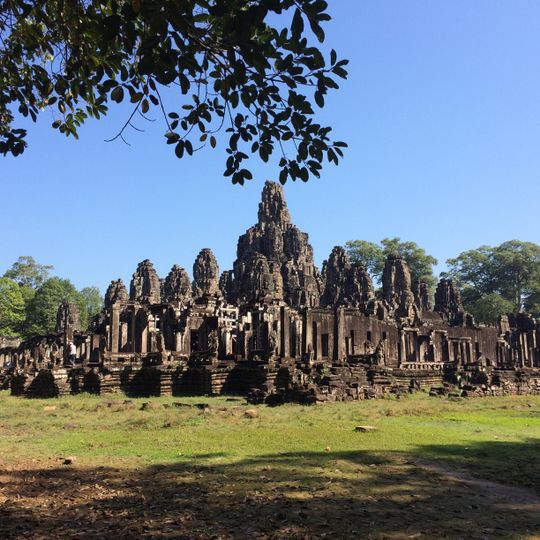
Bayon is a temple at the center of Angkor Thom, built from gray sandstone with multiple levels and densely clustered towers. Each tower carries faces looking toward the four cardinal directions, their features softened by moss and weathering over centuries.
Jayavarman VII built this temple between 1190 and 1210 as the state shrine for Mahayana Buddhism. The structure was later altered by Hindu kings who removed or modified many of its Buddhist elements.
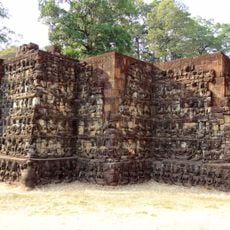
The outer gallery walls preserve scenes from late 12th-century life, showing fishermen on the Tonle Sap lake and traders in open-air markets. These carvings offer a window into how ordinary people lived during the reign of the Buddhist king.
The temple sits at the exact centre of Angkor Thom, so roads reach it directly from the gates at each of the city's cardinal points. It is oriented towards the east, with its buildings set back to the west inside enclosures elongated along the east-west axis. The temple has no wall or moat of its own; the walls and nāga-bridges of Angkor Thom serve that role.
The towers stand so close together that the faces overlap from certain angles, creating new visual combinations. Some visitors only realize how many faces are actually present when they leave the temple and look back.
The community of curious travelers
AroundUs brings together thousands of curated places, local tips, and hidden gems, enriched daily by 92,754 contributors worldwide.