Preah Palilay, Buddhist sanctuary in Angkor Archaeological Park, Cambodia
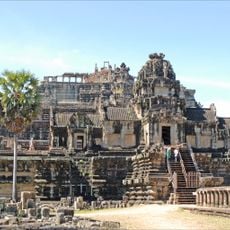
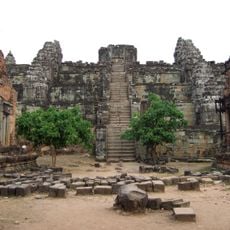
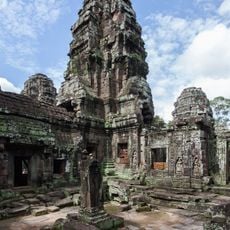
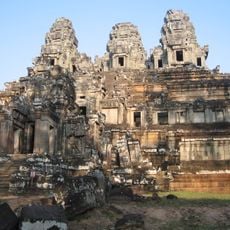
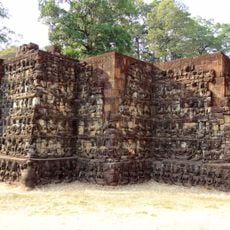
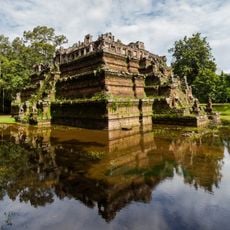
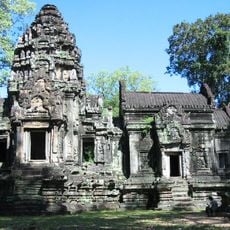
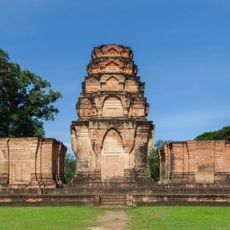
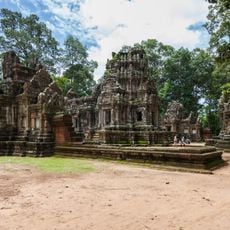
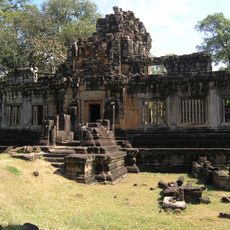
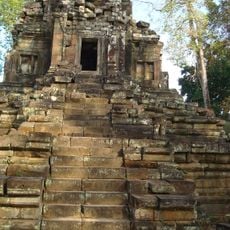
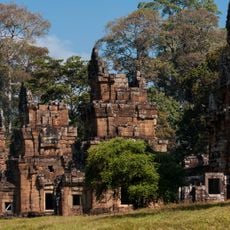
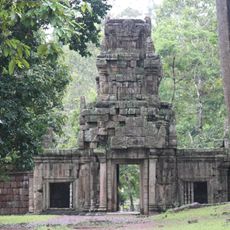
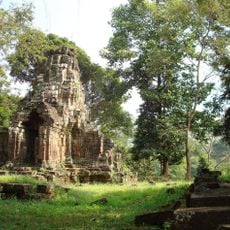
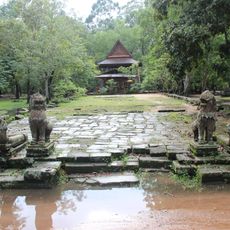
Preah Palilay is a Buddhist temple within Angkor Archaeological Park featuring a central pyramid tower surrounded by walls and an entrance gateway on its eastern side. The structure connects to the nearby royal terrace complex through a cross-shaped passage.
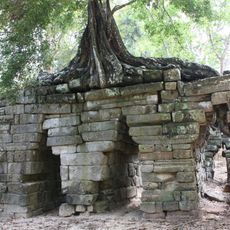
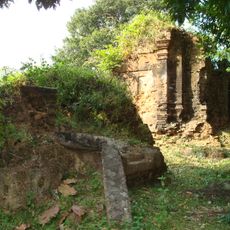
Dating is uncertain because no foundation stele or inscription survives. The sandstone sanctuary is usually placed in the first half of the 12th century, while the gopura may date from the late 13th or early 14th century. Chinese art historian William Willetts linked it to Suryavarman II. Henri Marchal cleaned the temple in 1918–19 and Maurice Glaize restored the gopura by anastylosis in 1937–38.
The temple's name may derive from Parilyyaka, the forest where the Buddha retreated after leaving Kosambi, a scene carved on the north gopura's east pediment. Other pediments show Sujata's offering of rice-milk and the subjugation of the elephant Nalagiri. A small Buddhist monastery stands near the temple today, and monks are often seen in the area.
Preah Palilay stands in the wooded area north of the Royal Palace in Angkor Thom, 400 m north-west of Phimeanakas and behind Thep Pranam. A 33 m causeway links the cross-shaped terrace to the single sandstone gopura, and a laterite enclosure 50 m square surrounds the sanctuary. A small Buddhist monastery operates near the temple, so monks are often present.
The temple's name may derive from Parilyyaka, the forest where the Buddha retreated after leaving Kosambi; a pediment on the northern gopura entrance shows the offering of animals there. A 3 m Buddha seated on a lotus, of a later period, stands before the laterite enclosure.
The community of curious travelers
AroundUs brings together thousands of curated places, local tips, and hidden gems, enriched daily by 93,737 contributors worldwide.