Kutisvara, Archaeological site in Angkor, Cambodia
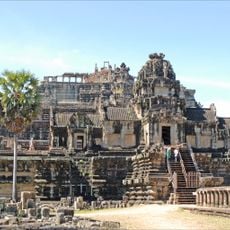
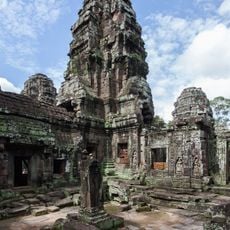
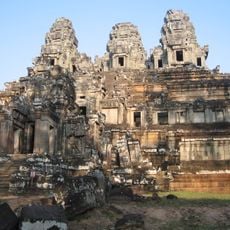
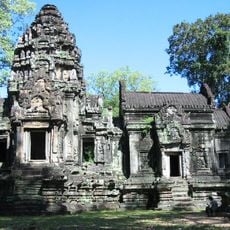
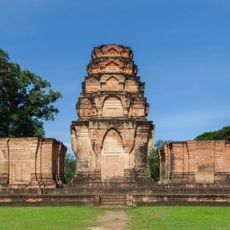
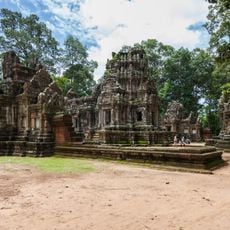
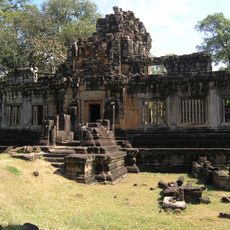
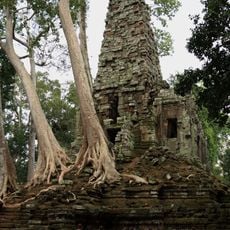
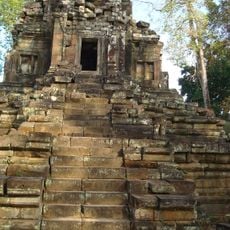
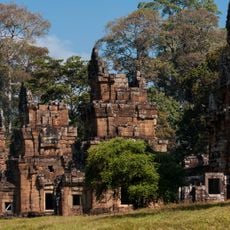
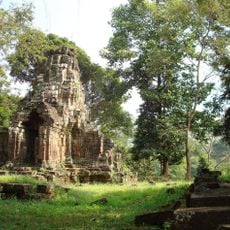
Kutisvara is a small temple complex in Angkor consisting of three towers arranged in a north-south line. The central structure is built of brick and flanked by laterite constructions that face east.
Whether Kutisvara was founded by Jayavarman II, linked to the site of Kuti in the Sdok Kok Thom stele, or by Rajendravarman II, named as builder in an inscription found at Banteay Kdei, remains unresolved. The ruin, 200 m north of Banteay Kdei, was only discovered in 1930 by the French archaeologists Henri Marchal and Henri Parmentier of the École française d'Extrême-Orient, who cleared it of vegetation and earth that same year.
Inscriptions at nearby Banteay Kdei reveal that this site held statues of Hindu deities, with the central shrine dedicated to Shiva. This religious purpose shaped how people understood and used this small temple complex.
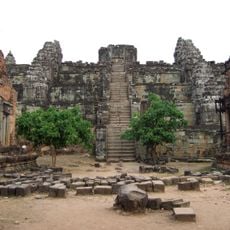
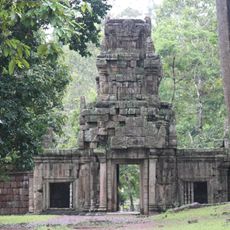
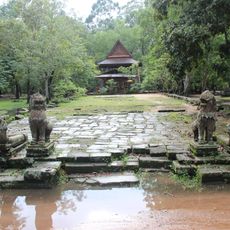
Kutisvara lies about 200 m north of Banteay Kdei, hidden among trees on a small earthen mound in the middle of rice fields. It is reached on foot from the Banteay Kdei and Srah Srang area. The three towers stand in a north–south row, with their sandstone doorways facing east.
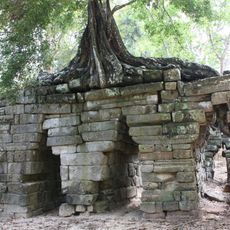
A pediment lying on the ground at Kutisvara carries a relief of the four-headed god Brahma, a carving visitors can still pick out among the fallen stones. The site was only rediscovered in 1930, when Henri Marchal and Henri Parmentier of the École française d'Extrême-Orient cleared it of vegetation and earth.
The community of curious travelers
AroundUs brings together thousands of curated places, local tips, and hidden gems, enriched daily by 94,466 contributors worldwide.