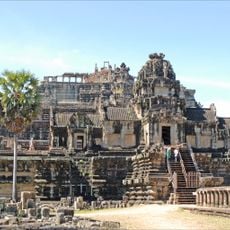
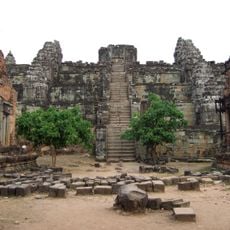
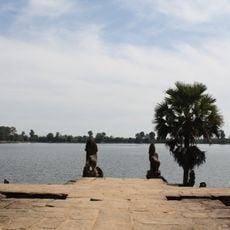
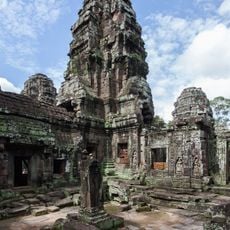
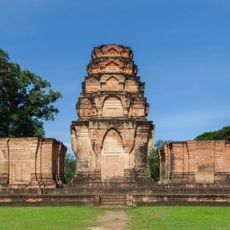
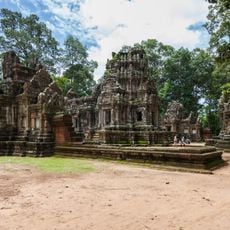
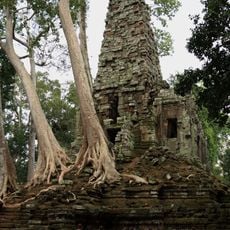
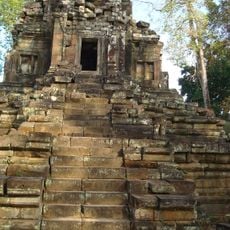
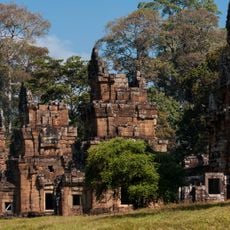
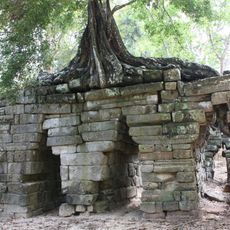
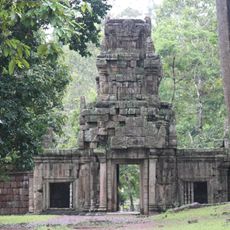
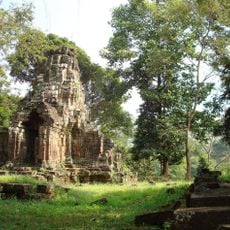
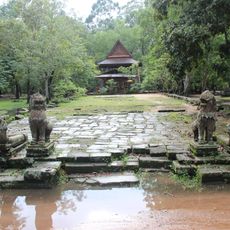
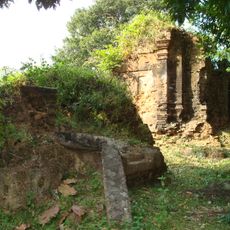
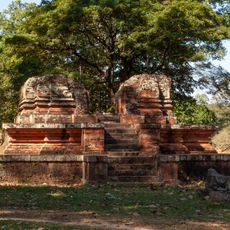
Khleangs, Archaeological site in Angkor, Cambodia
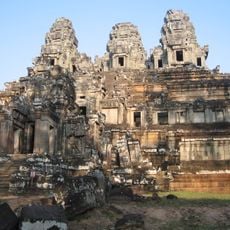
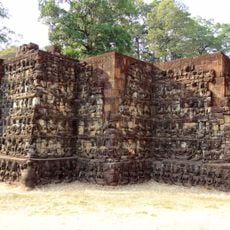
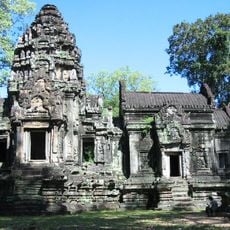
The Khleangs are two rectangular sandstone galleries of unequal length, set north and south of the road from Angkor Thom's Royal Palace to the Victory Gate. Each has a central gallery lit by large balustered windows, cross-shaped vestibules at east and west, and lower side chambers; the North Khleang, 60 m long and 4.7 m wide, is the larger and more carefully built.
The North Khleang was built in wood under Rajendravarman II and rebuilt in stone by Jayavarman V around the turn of the 11th century; the smaller South Khleang followed under Suryavarman I and was left unfinished. Two inscriptions in the South Khleang repeat the oath of allegiance also carved in 1011 on the east gopura of the Royal Palace. Angkor Thom did not yet exist; the buildings stood in the northern part of Yasodharapura.
The modern name Khleang means 'storeroom' in Khmer, but warehouses or treasuries are ruled out as the buildings' function. In the South Khleang, two inscriptions repeat word for word the workers' oath of allegiance also carved in 1011 on the doorposts of the Royal Palace's eastern gopura. The purpose remains debated; one proposal is that they served as reception halls for foreign dignitaries.
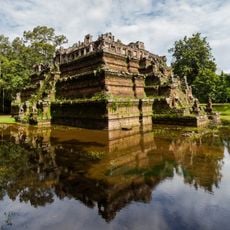
The Khleangs stand in a line running north to south, just east of the Royal Square and behind the twelve towers of Prasat Suor Prat, with the royal road to the Victory Gate passing between them. Each building faces a pond of about 90 by 48 metres on its side toward the road. The South Khleang is the smaller and narrower of the two, 45 metres long and 4.2 metres wide, and it remained unfinished.
Two inscriptions in the South Khleang repeat word for word the oath of the workers that was also carved in 1011 on the doorposts of the east gopura of the Royal Palace. This find helped reconstruct the building history of Angkor Thom.
The community of curious travelers
AroundUs brings together thousands of curated places, local tips, and hidden gems, enriched daily by 94,521 contributors worldwide.