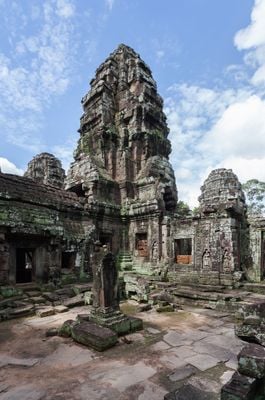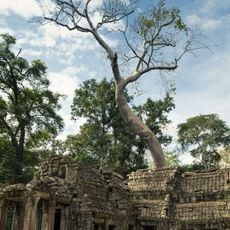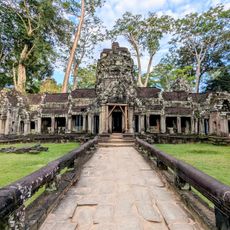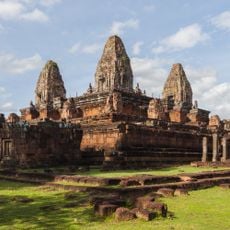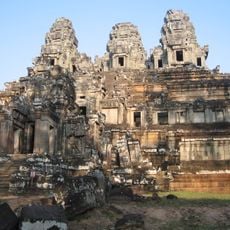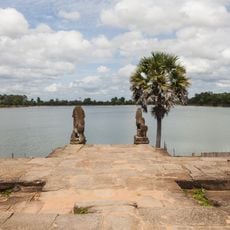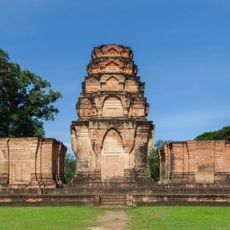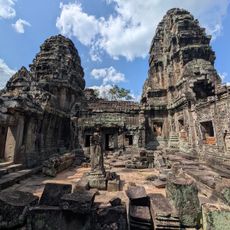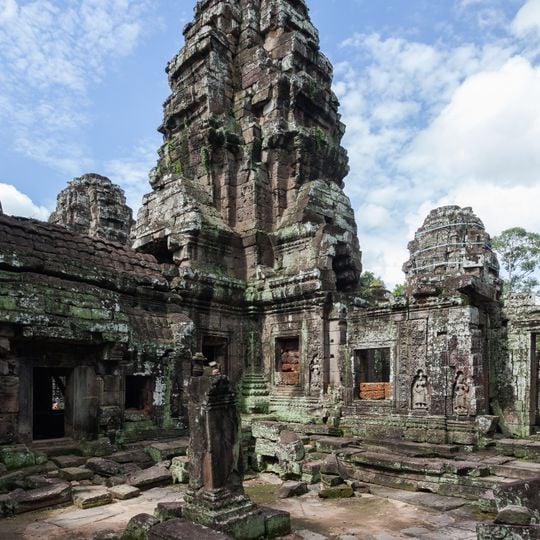
Banteay Kdei, Buddhist temple in Angkor archaeological park, Cambodia.
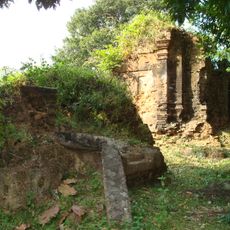
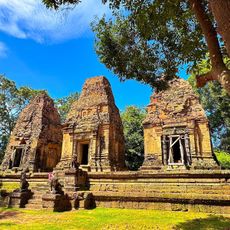
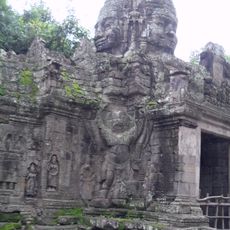
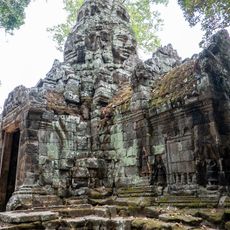
Banteay Kdei is a Buddhist temple in the Angkor archaeological park with four entrance gates adorned with stone faces. These are connected by galleries and courtyards that lead to a central sanctuary decorated with carvings.
Banteay Kdei was built from the mid-12th to early 13th century under Jayavarman VII, on the site of a 10th-century temple built by Rajendravarman. Inscriptions name the royal architect Kavindrarimathana. Abandoned after the Khmer reign, it was cleared of vegetation in 1920–1922 under Henri Marchal, and monks occupied it at intervals until the 1960s.
The temple's name comes from Kuti, a village granted to the Brahman Sivakaivalya, chief priest of the Devaraja cult, as recorded on the Sdok Kak Thom stele. Monks occupied the complex at intervals until the 1960s, and the site is now cared for by the Angkor conservation authority.
The complex sits on a single level, entered from the east gopura, with two concentric galleries and towers inside successive enclosure walls. The outer laterite wall measures about 700 by 300 metres, while the cloistered core covers roughly 65 by 50 metres. The sandstone is badly weathered and parts are under renovation, so some passages may be closed off.
In 2001, a Japanese team from Sophia University unearthed a cache of 274 sandstone Buddhist statue fragments at the temple, along with a few metal pieces. The temple was cleared of vegetation between 1920 and 1922 under conservator Henri Marchal, using anastylosis.
The community of curious travelers
AroundUs brings together thousands of curated places, local tips, and hidden gems, enriched daily by 94,474 contributors worldwide.