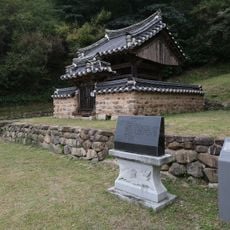
Sosu Seowon, Neo-Confucian academy in Sunheung-myeon, South Korea
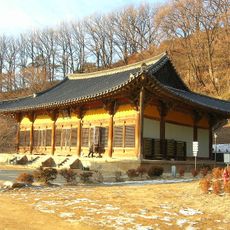
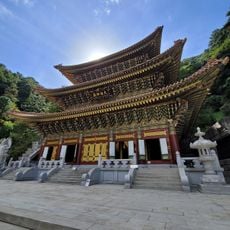
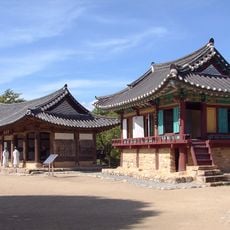
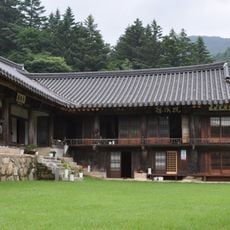
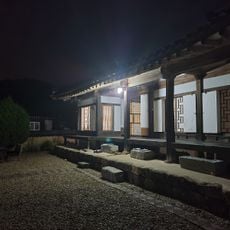
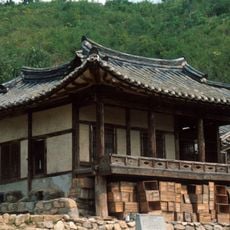
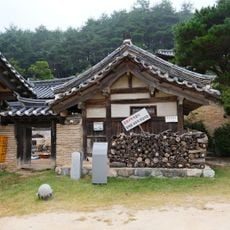
Sosu Seowon stands on the site of the Silla-era Suksusa temple in Sunheung-myeon, Yeongju. Its gate, Sapjumun, leads to the lecture hall Gangdangdang, which bears a "Baekundong" plaque outside and a "Sosu Seowon" plaque written by King Myeongjong inside. To its left are the Munseonggongmyo shrine and Jeonsacheong hall; to the right, Hakgujae and Jirakjae dormitories, with Ilsinjae and Jikbangjae behind. A 4 m danggan jiju flagpole support from the old temple survives at the entrance.
The academy was founded in 1543 during the Joseon Dynasty as a place for studying Neo-Confucian philosophy. It became an important center for the intellectual growth of this philosophical tradition throughout Korean society.
The academy represents how these educational communities worked in daily practice, serving as gathering places for scholars who studied and debated together. The spaces show where teaching happened and how students lived while pursuing their studies.
The site is accessible throughout the year and visitors can explore the buildings and grounds on foot. It is worth spending time learning about the purpose of each structure, as this context helps you understand how the academy functioned as a working community.
The buildings of the complex are oriented to face the cardinal directions, a construction choice connected to traditional Korean ideas about harmony with nature and the seasons. This careful alignment shapes how light and shadow move across the grounds throughout the day.
The community of curious travelers
AroundUs brings together thousands of curated places, local tips, and hidden gems, enriched daily by 94,126 contributors worldwide.