Royal Tombs of the Joseon Dynasty, Royal mausoleums in Gyeonggi Province, Seoul and Gangwon Province, South Korea
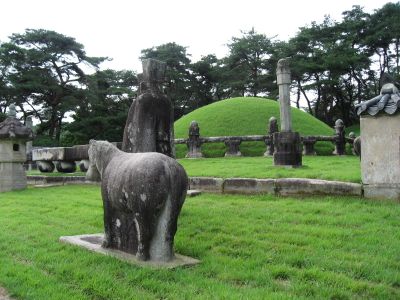
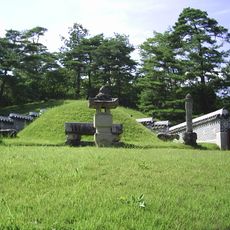
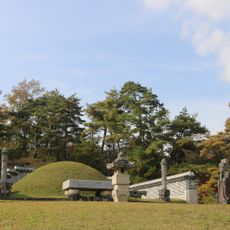
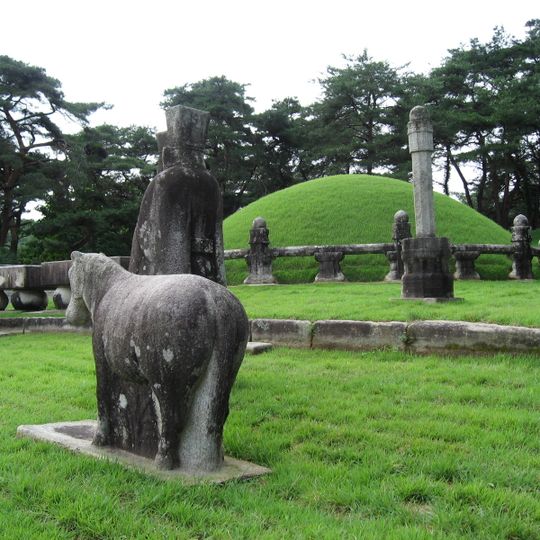
The Royal Tombs of the Joseon Dynasty comprise 40 tombs across 18 locations, each with a grass-covered burial mound (bongbun) and a row of carved stone figures such as scholar (muninseok) and soldier (muinseok) statues, plus a stone lantern (jangmyeongdeung). A red-pillared gate (hongsalmun) marks the entrance, and a shrine (jeongjagak) stands beyond it.
These burial grounds began in 1392 when the Joseon Dynasty started and follow rules from Confucian texts and traditional geomancy practices. Over centuries, new graves were added while the foundation and layout remained true to the same principles.
The layout follows Chinese Confucian texts such as the Book of Rites and the Rites of Zhou. A red-pillared hongsalmun gate marks the living world; beyond it, the jeongjagak shrine, subokbang guard quarters and suragan kitchen served memorial rites. Two stone-paved paths, the higher sindo for spirits and the lower eodo for visitors, lead to the shrine.
The site is divided into several separate clusters, each requiring its own visit, with some being easier to reach than others. Planning time for multiple locations and checking which areas are currently open beforehand helps with planning your visit.
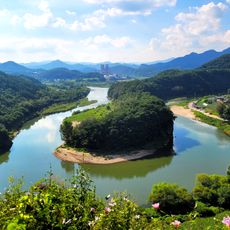
Many of the tomb locations were deliberately chosen to be at specific distances from the capital and aligned according to geomantic principles. These invisible lines and distances were as important to Koreans then as the stone structures themselves.
The community of curious travelers
AroundUs brings together thousands of curated places, local tips, and hidden gems, enriched daily by 94,675 contributors worldwide.