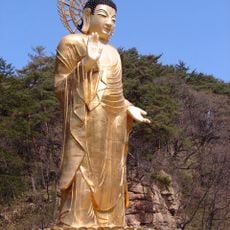
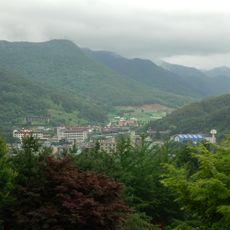
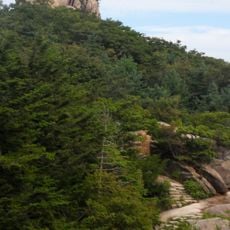
Palsangjeon, Buddhist temple at Songnisan National Park, South Korea
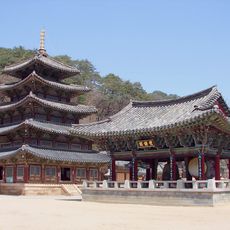
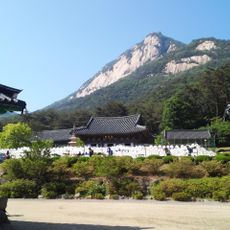
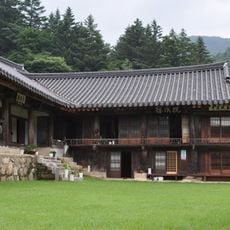
Palsangjeon is a wooden pagoda located within the Beopjusa temple complex in Songnisan National Park, South Korea. It rises on a stone platform with doors on all four sides, and inside there are four Buddha statues alongside 500 small white figures arranged around them.
The original building dates to 553, placing it among the earliest temple structures in Korean history. It was destroyed during the Seven Year War and rebuilt in 1605, following the same form as the original.
The murals inside show eight scenes from the life of the Buddha, from his birth to his passing into Nirvana. Walking through the hall feels like reading a painted story of the Buddhist path, one panel at a time.
The pagoda sits within Beopjusa temple grounds, which are inside Songnisan National Park and reachable on foot from the park entrance. Visitors can walk freely around the structure and step inside to see the statues and murals at their own pace.
Palsangjeon is one of only two wooden pagodas still standing in South Korea, which makes it a rare example of this type of construction. The structure was built without metal nails, relying instead on interlocking wooden joints to hold everything together.
The community of curious travelers
AroundUs brings together thousands of curated places, local tips, and hidden gems, enriched daily by 60,000 contributors worldwide.