Gonghwachun, Chinese restaurant museum in Jung District, South Korea
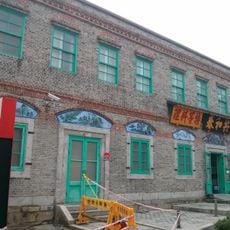
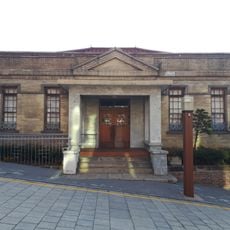
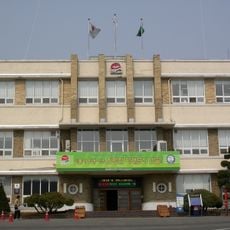
Gonghwachun is a two-storey former Chinese restaurant building in Incheon's old Qing concession, built around 1908 with a central courtyard. Since April 2012 it has housed the Jajangmyeon Museum, whose seven exhibition spaces cover the Chinese community of the open-port era and the dish's history, and which includes a reconstruction of the 1960s kitchen.
The two-storey building with an inner courtyard was put up around 1908 in the Qing concession of Incheon, with craftsmen from Shandong taking part, and first served as an inn for traders. The restaurant Gonghwachun was opened in 1912 by Yu Huiguang (1886–1949), a migrant from Shandong, and traded until 1983. It is listed as Registered Cultural Property No. 246 and reopened in April 2012 as the Jajangmyeon Museum.
The name Gonghwachun means "spring of the republic," chosen around 1912 to mark the founding of the Republic of China. The founder, Shandong-born Yu Hee-gwang (1886–1949), ran the business until 1983, and the museum's special exhibition room is named the Yu Hee-gwang Memorial Hall in his honour. A recreated 1960s kitchen shows the working setup of the old restaurant.
The museum occupies the two-storey 1908 building in Incheon's Chinatown, in the Seollin-dong area of Jung-gu. Exhibits are arranged across seven display spaces plus a temporary exhibition hall, with a reconstruction of the 1960s kitchen. The building has an inner courtyard and stairs between floors, so allow time to move between the upper and lower sections.
The building was put up around 1908 with craftsmen from Shandong and first served as a guesthouse giving traders board and lodging. Its two storeys surround an inner courtyard, a layout visitors can still walk around inside the Jajangmyeon Museum.
The community of curious travelers
AroundUs brings together thousands of curated places, local tips, and hidden gems, enriched daily by 93,460 contributors worldwide.