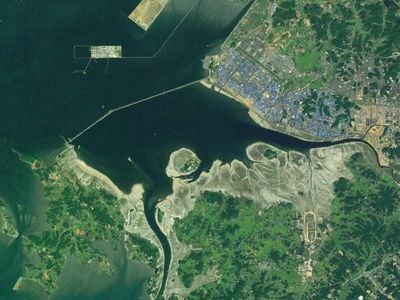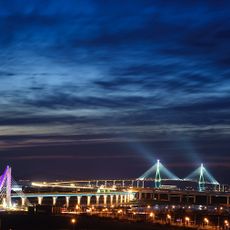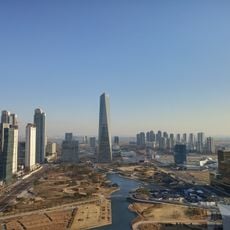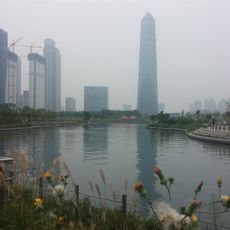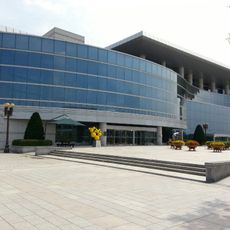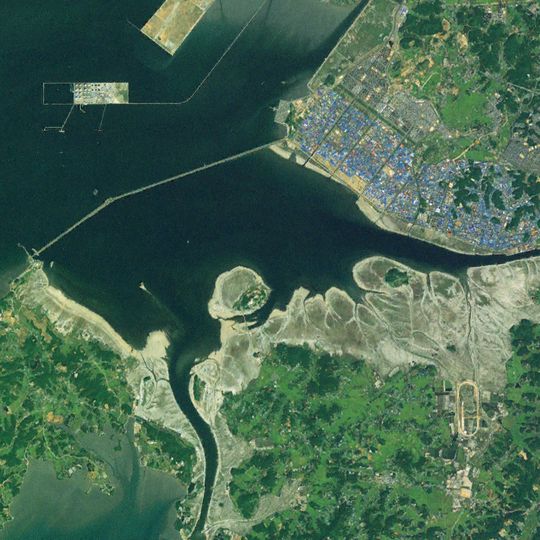
Sihwa lake, lake made by the Sihwa tidal barrage
Sihwa Lake is an artificial body of water in South Korea created in 1994 by constructing a long seawall across Gyeonggi Bay. Covering roughly 44 square kilometers, it was originally built to reclaim land, control floods, and provide water for agriculture.
The lake emerged in the 1990s as a land reclamation project, but water quality deteriorated quickly after the seawall closed due to factory wastewater. Beginning in 2004, a tidal power plant with ten turbines was constructed and completed in 2011, harnessing natural tide cycles to generate electricity.
The lake's name reflects the region where it was created. Today, the area serves as a gathering place where visitors can observe how engineering and tidal cycles shape daily life around the water.
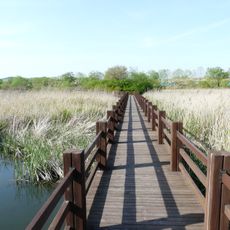
The site is accessible to visitors, with an observation tower that opened in 2014 offering views of the lake and turbines. The embankment is popular for walking, where you can watch the twice-daily tidal cycles and power generation in action.
The ten turbines generate power twice daily as tides flow through them, making this the world's largest tidal power plant. It produces enough electricity annually to power hundreds of thousands of homes while reducing reliance on fossil fuels.
The community of curious travelers
AroundUs brings together thousands of curated places, local tips, and hidden gems, enriched daily by 91,317 contributors worldwide.