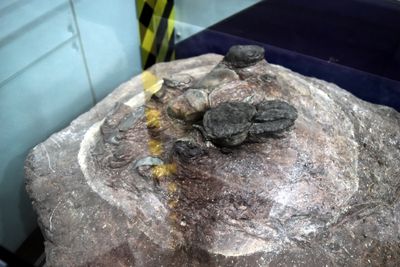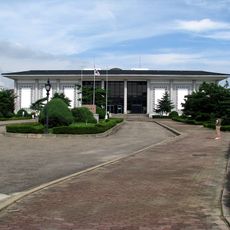
Gojeongri dinosaur's egg fossil area, Dinosaur egg fossil site in Hwaseong, South Korea.
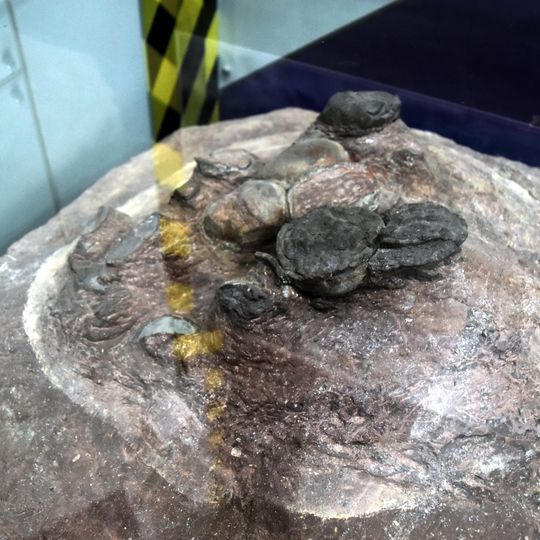
Gojeongri is a fossil site containing preserved dinosaur eggs from the late Cretaceous period, embedded in exposed rock formations at varying depths. The area displays how these eggs were naturally buried in layers of stone and shows the excavation work that has revealed them over time.
The fossil deposits were discovered in the late 1990s and officially designated as a Natural Monument of South Korea in 2000. This protected status allowed the site to become a focus for ongoing scientific research and public education.
The site reveals evidence of dinosaur life from millions of years ago when these creatures inhabited the region and reproduced here. Visitors can observe how the eggs were naturally buried in rock layers, offering a tangible connection to prehistoric times.
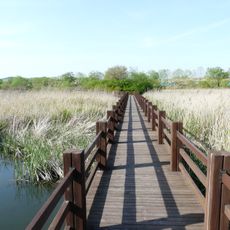
Dedicated pathways allow visitors to safely observe the excavation zones, with information boards placed throughout the area. Plan to visit during dry weather so you can walk comfortably across the site without difficulty.
Researchers continue to uncover fossilized eggs at different stages of preservation, offering insights into how ancient dinosaurs reproduced and cared for their young. These ongoing discoveries make the site a living laboratory where new findings still emerge regularly.
The community of curious travelers
AroundUs brings together thousands of curated places, local tips, and hidden gems, enriched daily by 91,759 contributors worldwide.