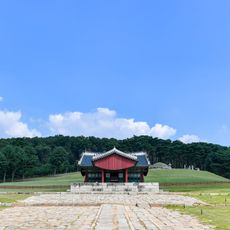
Yongjusa, Buddhist temple on Hwasan slopes in Hwaseong, South Korea
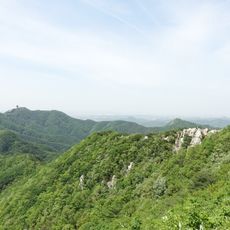
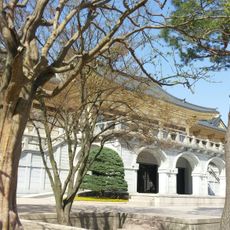
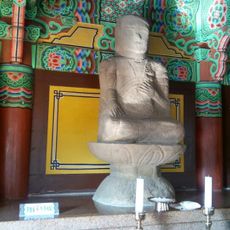
Yongjusa is a large Buddhist temple situated on Hwasan mountain slopes in Hwaseong with multiple structures arranged across the grounds. The main hall Daewoongbojeon contains a central Buddha statue and decorative wall paintings created by the renowned artist Kim Hong-do.
Yeomgeo Hwasang, second patriarch of the Gajisan school, founded the temple as Garyangsa in 854. It was expanded in the 10th century and served as a state prayer site under Goryeo's King Gwangjong, but was burned during the Manchu invasion of 1636–1637. King Jeongjo rebuilt it in the late 18th century after moving his father Prince Sado's tomb nearby, renaming it Yongjusa as the tomb temple.
The temple's name means "Dragon Jewel Temple," and it is the head temple of the Jogye Order's Second District, overseeing about 80 temples in southern Gyeonggi Province. It runs templestay programs for Korean and international visitors. The site is also promoted as a place of filial piety, reflecting King Jeongjo's devotion to his father, Prince Sado.
The temple is spread across the mountainside, so plan for some walking on uneven paths to see all the buildings and areas. Wear comfortable shoes and allow extra time if you want to explore every section and admire the details.
The bronze bell was cast in 1790 by the monk Seok Banya using 15,000 kg of bronze, and its inscription names Yeomgeo, the 9th-century founder of the temple. The main hall's rear painting, 3 by 4 metres, was made by Kim Hong-do, the county magistrate at the time, and is the first Korean Buddhist painting to use Western perspective and shading.
The community of curious travelers
AroundUs brings together thousands of curated places, local tips, and hidden gems, enriched daily by 93,460 contributors worldwide.