Hwaseong Fortress, UNESCO World Heritage fortress in Suwon, South Korea.
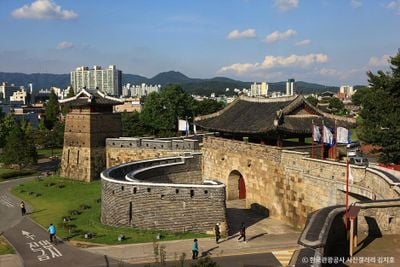
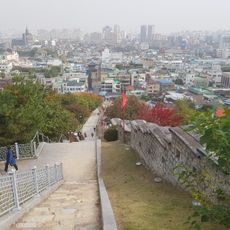
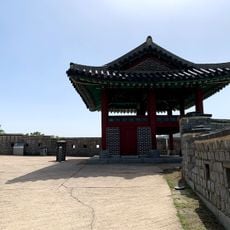
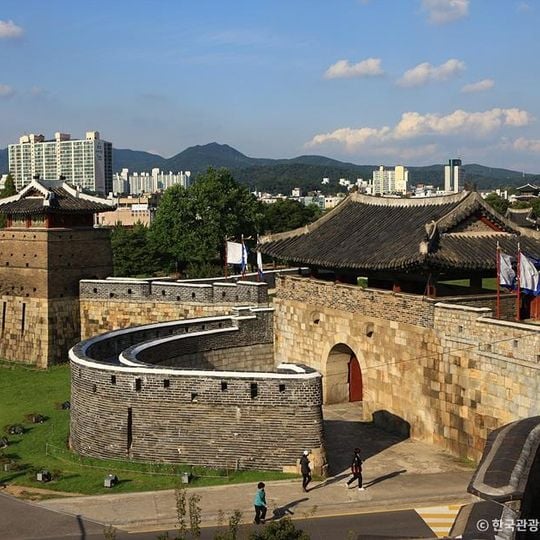
Hwaseong Fortress is a 5.74-kilometre wall of grey granite blocks and brick that encircles central Suwon, rising 4 to 6 metres with crenellated parapets. Its four main gates include Janganmun, Korea's largest gate, with a two-storey pavilion and a semicircular bastion. The wall passes over two hills and incorporates sluice gates, command posts and arrow platforms.
A king of the Joseon Dynasty ordered this fortress built in the 1790s to honor and protect his father's burial place. The structure suffered damage during war but was later restored using original construction documents that guided the reconstruction.
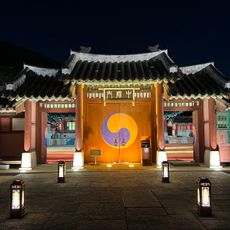
The north gate, Janganmun, takes its name from Chang'an, the old capital of China's Han, Sui and Tang dynasties, reflecting King Jeongjo's wish that Suwon prosper like that city. The south gate, Paldalmun, means "open in all directions". The east gate, Changnyongmun, is named for the blue dragon of the five elements, associated with the east.
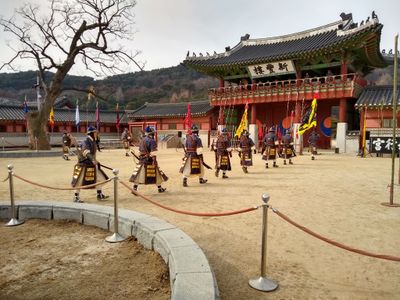
The complex has several walking paths and information signs in different languages to guide your visit. Guided tours run regularly from the main entrance and provide a structured way to explore the site.
A detailed building manual from the original construction period survived the war years and allowed workers to restore the damaged fortress with great precision. This historical document is a rare example of technical planning from that era that made an authentic reconstruction possible.
The community of curious travelers
AroundUs brings together thousands of curated places, local tips, and hidden gems, enriched daily by 93,357 contributors worldwide.