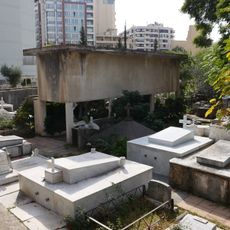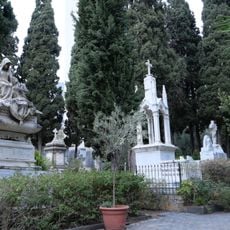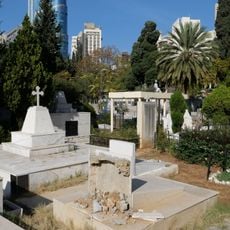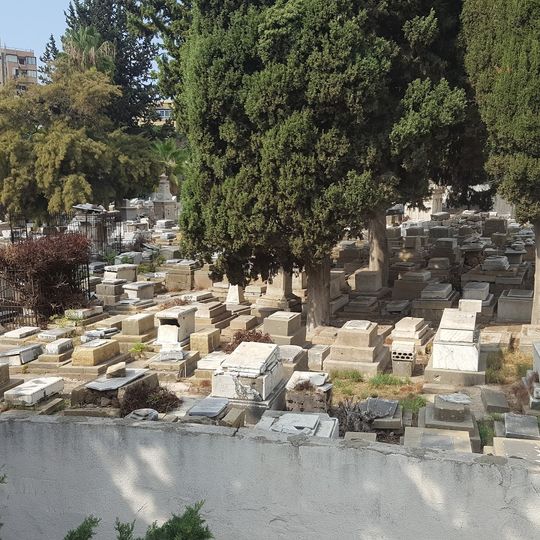
Jewish cemetery of Beirut, Jewish cemetery in Ras el Nabaa district, Beirut, Lebanon.
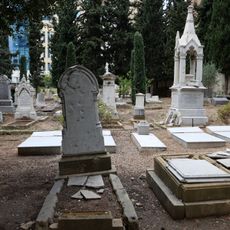
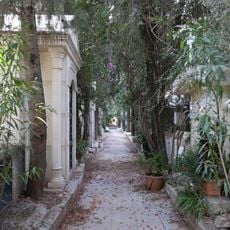
The Jewish cemetery of Beirut is a burial ground in the Ras el Nabaa district containing thousands of graves marked with Hebrew inscriptions and Stars of David. The tombstones span different periods and styles, with the oldest dating back to the early 19th century.
The cemetery was established in 1829 with the burial of Rabbi Moïse Yedid Levy, its first interment; more than 3,000 Lebanese Jews have been buried there over the following two centuries. During the 1975–1990 civil war it lay on the Green Line dividing West and East Beirut and was held by the Phalanges, who laid land mines across it. Shells and rockets damaged several graves, and after the war the Lebanese Armed Forces cleared the mines.
Among the graves are those of Rabbi Haïm Dana, spiritual leader of the community, who died in 1903, and Esther Safra (1900–1943), wife of the banker Jacob Safra of the Safra banking family. The cemetery has received burials from the early 19th century to the present day.
The site is located on Damascus Road and is accessible on foot, though visitors should prepare for uneven ground conditions. It is recommended to visit with local guides or through organizations familiar with the location to ensure a safe and meaningful visit.
During Lebanon's civil conflict, this cemetery became a demarcation line between hostile territories and mines were buried throughout the grounds. This tragic history left deep marks on the landscape, turning the place into a silent witness to the effects of war.
The community of curious travelers
AroundUs brings together thousands of curated places, local tips, and hidden gems, enriched daily by 94,446 contributors worldwide.