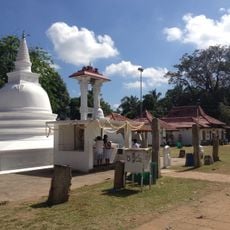
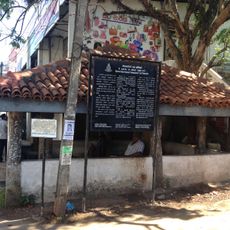
Pilikuththuwa Raja Maha Vihara, Buddhist temple in Gampaha District, Sri Lanka.
Pilikuththuwa Raja Maha Vihara is a cave temple on a 400–450 ft hill, with 99 drip-ledged rock caves recorded across about 200 acres, of which 78 have been identified. Its main cave shrine, built in the Kandyan period, holds a reclining, a standing and a samadhi Buddha, and a stupa stands beneath a rock overhang shaped like a cobra hood.
The site was inhabited by Buddhist monks starting in the 2nd century BC, who carved the caves into the rock formations. Later, colonial powers left their own traces, including a wooden bridge from the Dutch period.
The cave shrine's paintings include a rare depiction of Buddhist nuns, both ordained and lay, which scholars say is the only such painting in a Sri Lankan image house. The outer corridor shows Jataka tales with figures painted as Dutch colonials, and two Portuguese soldiers guard the doorway. Two bo trees, called Kumara and Kumari, stand in front.
The temple complex spreads across a large area with multiple caves, so plan time for exploring. The grounds can be slippery, especially after rain, so sturdy footwear and caution are recommended.
The temple's cave shrine holds a rare painting of Buddhist nuns, both ordained and lay, on its walls. Archaeologists note that women were otherwise never depicted in temple image houses, making this mural an exception to the tradition.
The community of curious travelers
AroundUs brings together thousands of curated places, local tips, and hidden gems, enriched daily by 93,837 contributors worldwide.