Jbel Toubkal, Mountain peak in Al Haouz Province, Morocco
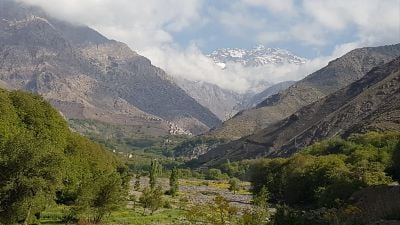
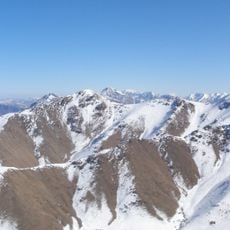
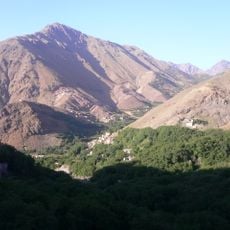
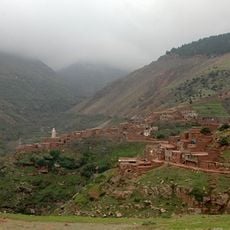
Jbel Toubkal is a summit in the High Atlas that rises to 4167 meters, forming the highest point in North Africa. The mountain stands above rugged slopes and rocky ridges crossed by narrow trails that wind through scree fields up to the rocky top.
European mountaineers first reached the summit in June 1923 after an expedition organized by French explorers. Local guides knew the routes long before, using the high paths for their herds and exchange between valleys.
The name comes from Berber language and recalls the communities who have lived at these altitudes for centuries. Hikers meet shepherds along the way, moving with their flocks on steep paths and tending fields in the lower valleys.
The climb usually starts in the village of Imlil, where visitors can hire guides and rent gear before setting out. Most hikers stay overnight in a mountain refuge halfway up to reach the summit at dawn and avoid the cold of night.
The massif is made of dark volcanic andesite and rhyolite, unlike the sedimentary rock of much of the High Atlas. During the Würm glaciation the valley now holding the Toubkal refuge carried the Atlas's longest glacier, 5 km long, whose trough-shaped valleys remain visible. The summit is crowned by a large pyramidal metal trigonometric marker.
The community of curious travelers
AroundUs brings together thousands of curated places, local tips, and hidden gems, enriched daily by 93,589 contributors worldwide.