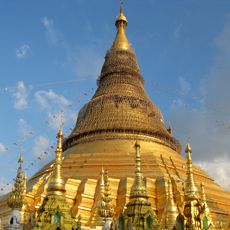
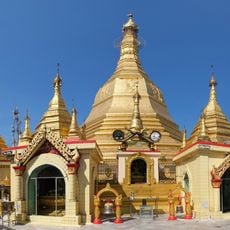
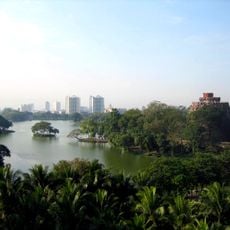
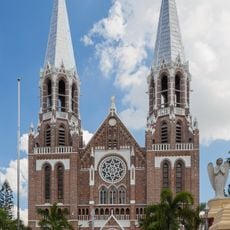
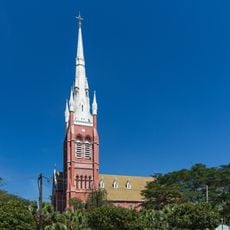
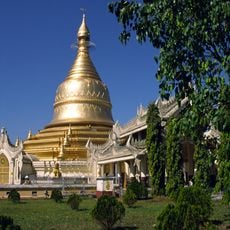
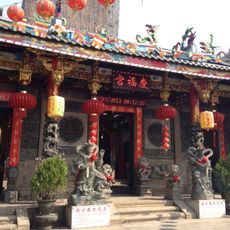
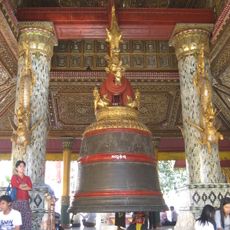
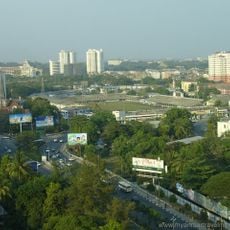
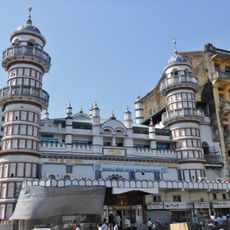
Alanpya Pagoda, Buddhist pagoda in Yangon, Myanmar.
Alanpya Pagoda is a Buddhist shrine rising 34 meters on Alanpya Hill with a golden spire dominating its appearance. The structure features multiple prayer spaces and altars arranged around the central stupa, creating a place where visitors can observe worship and meditation.
The shrine originated in the 15th century when Queen Shin Sawbu covered it with gold leaf, establishing its sacred status. Later rulers including King Bayinnaung and Min Letwe undertook major reconstructions during the 16th and 18th centuries respectively, each adding to the site's spiritual importance.
The pagoda carries different names across local languages, known as Kyaik Hapaw Cih in Mon, reflecting its deep connection to various communities in Myanmar. This linguistic variety shows how the site belongs to different groups of people who worship and visit here.
This shrine sits near other religious sites in the area and welcomes visitors year-round with no entrance fee. Morning and late afternoon hours offer a quieter experience, making it easier to observe the space and understand its layout without crowds.
During British colonial times, the structure served as a signal station helping ships navigate the Yangon River, earning it the alternative name Signal Pagoda. This unexpected use shows how the site had practical value beyond religious purposes during a specific historical period.
The community of curious travelers
AroundUs brings together thousands of curated places, local tips, and hidden gems, enriched daily by 60,000 contributors worldwide.