IJsselmeer, Artificial lake in North Holland, Netherlands
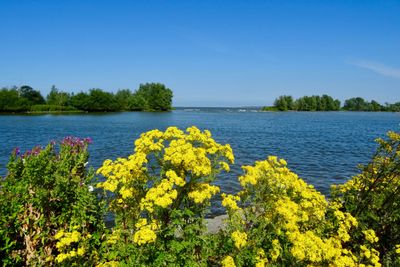
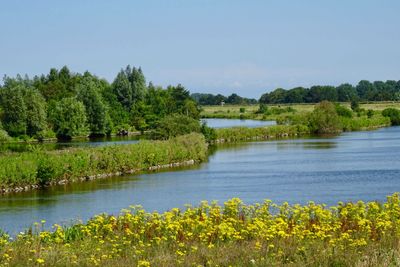
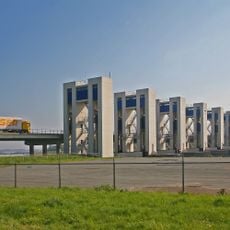
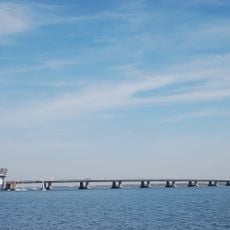
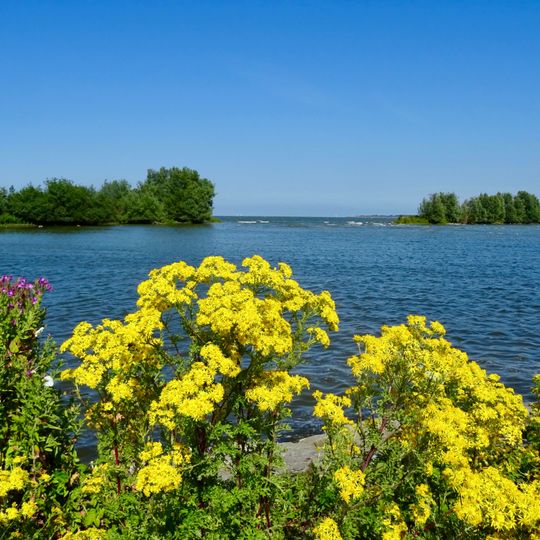
IJsselmeer is a closed-off freshwater lake of about 1,100 km² between North Holland, Friesland and Flevoland, with an average depth of 4.5 m. The IJssel, which gives it its name, supplies roughly 70% of its water. A 32-km dyke, the Afsluitdijk, separates it from the Wadden Sea and the North Sea beyond.
Roman geographer Pomponius Mela recorded a lake complex here as Lacus Flevo in 44 AD. Storm surges in 1164, 1170 and 1287 turned the Almere into the saltwater Zuiderzee. After the 1916 flood, Cornelis Lely's Zuiderzee Works began; the 32 km Afsluitdijk closed the bay in 1932, and river water flushed the salt out within about five years.
The name comes from the IJssel River that flows into the lake and once emptied directly into the sea. Today locals use the water for sailing and fishing for freshwater species like pike and perch.
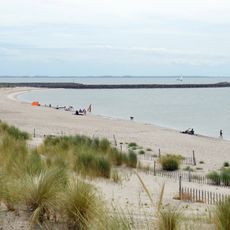
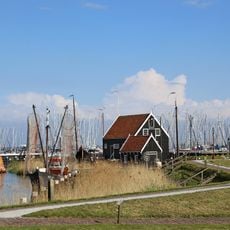
Visitors can use cycling paths and walking routes along the coast, passing through small harbor towns and open landscapes. Wind can be strong, so bringing clothing for changing weather is a good idea.
Beneath the lakebed lie remains of drowned villages that once stood on the shores of the old Zuiderzee. Divers have found tools, pottery and even shipwrecks from the period before the dam was built.
The community of curious travelers
AroundUs brings together thousands of curated places, local tips, and hidden gems, enriched daily by 94,041 contributors worldwide.