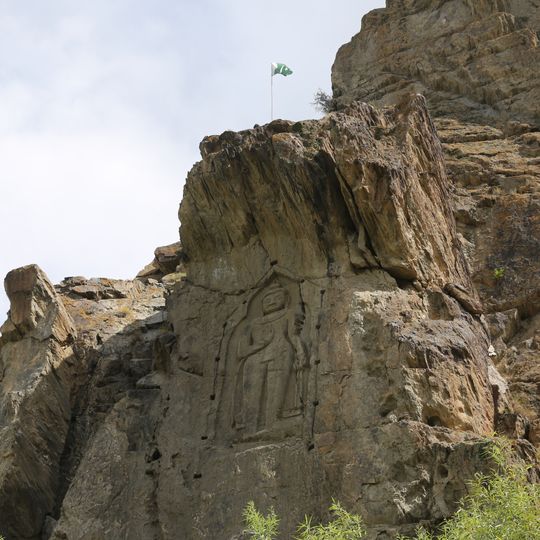
Kargah Buddha, Rock relief and archaeological site in Gilgit Tehsil, Pakistan.
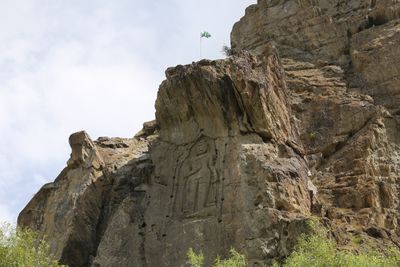
The Kargah Buddha is a rock relief in northern Pakistan, carved directly into a cliff face near the confluence of the Kargah and Shukogah streams. The figure stands about 3 meters (10 ft) tall and depicts a standing Buddha on a rocky surface surrounded by mountain terrain.
The carving was made when Buddhism was widespread in the region, most likely between the 7th and 8th centuries. Excavations nearby uncovered the remains of monasteries and stupas, suggesting there was once an active Buddhist community in the area.
The raised right hand of the figure shows the Abhaya mudra, a gesture meaning protection and the absence of fear in Buddhist practice. Anyone looking closely at the carving can recognize this hand position as one of the most common gestures in Buddhist iconography.
The site is about 10 kilometers (6 miles) south of Gilgit and can be reached by mountain road, which may vary in condition depending on the season. Visitors should wear warm layers and allow extra time, as the terrain at this elevation can be demanding.
Local people in the area know the figure by a name tied to an old story about a witch who was turned to stone by a saint, with no connection to its Buddhist origin. This shows how a carving made for one religious purpose can take on a completely different meaning over time in the same community.
The community of curious travelers
AroundUs brings together thousands of curated places, local tips, and hidden gems, enriched daily by 90,838 contributors worldwide.