Bydgoszcz Canal, Industrial waterway in north-central Poland
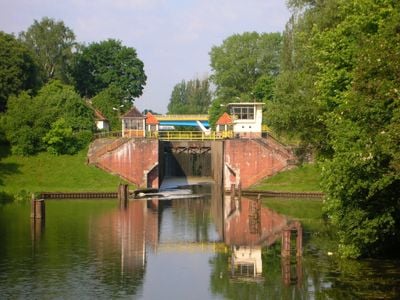
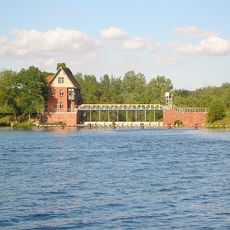
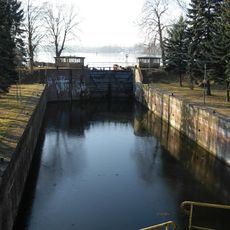
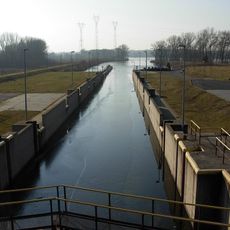
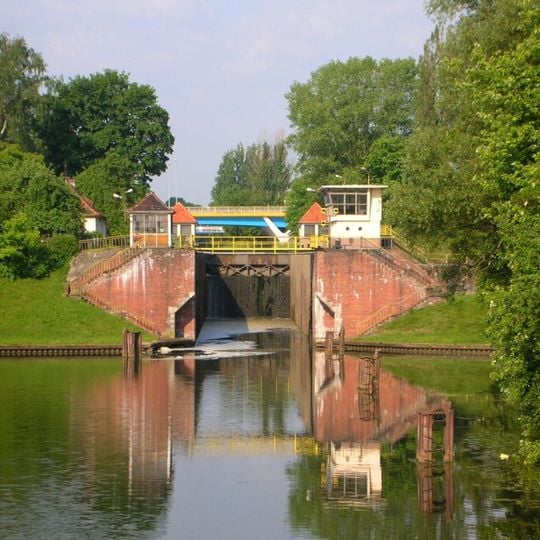
The Bydgoszcz Canal is an artificial waterway that extends roughly 27 kilometers and links two major river systems through a series of locks designed to manage water flow and level changes. The waterway passes through several districts and incorporates specialized hydraulic structures built at different periods to improve navigation.
The waterway was completed in the late 1700s as part of a regional expansion project and immediately became essential for connecting inland trade routes. Significant upgrades occurred around the start of the 1900s to improve water management and increase traffic capacity.
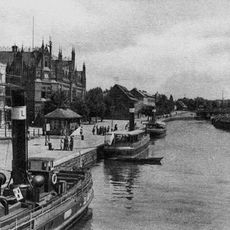
The waterway takes its name from the city it passes through and remains central to how locals view their town's character. Walking along the towpaths, you notice old warehouse buildings and landing areas that still reflect the rhythm of commerce that once defined daily life here.
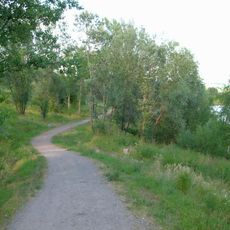
The waterway is most accessible for visitors from late spring through early autumn, when water levels are stable and weather conditions are favorable. Walking paths run along the banks and remain generally open to the public, though some sections may have uneven surfaces or restricted areas.
The water-saving expansion basins in certain districts are a noteworthy engineering feature that recycles water during lock operations to reduce overall consumption. This approach reflects early thinking about resource efficiency in an industrial context.
The community of curious travelers
AroundUs brings together thousands of curated places, local tips, and hidden gems, enriched daily by 90,870 contributors worldwide.