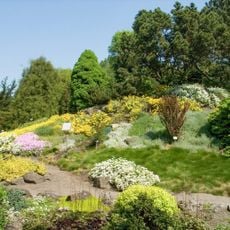
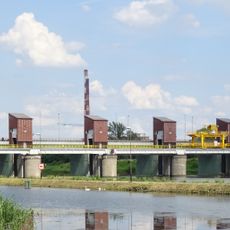
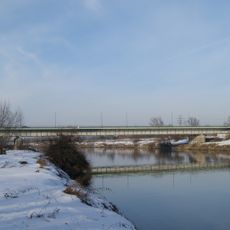
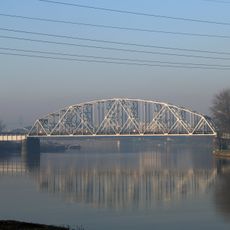
Staw Dąbski, Ecological water area in Grzegórzki district, Kraków, Poland.
Staw Dąbski is a small anthropogenic pond in Kraków's Dąbie area, a former clay pit dug by a brickyard in the first half of the 20th century. When clay extraction stopped, shallow groundwater filled the pit. The ecological use covers 2.53 hectares, and the Białucha river flows nearby, reaching its mouth on the Vistula about 400 metres away.
Staw Dąbski began as a clay pit worked by a brickyard operating in Dąbie in the first half of the 20th century. When clay extraction stopped, shallow groundwater filled the excavation, creating the pond. On 13 January 2010 the Kraków City Council passed resolution XC/1202/10 establishing the 2.53-hectare site as an ecological use.
The name comes from the Dąbie district where the pond lies. The yellow water-lily, strictly protected in Poland, grows at only two sites in Kraków, and one of them is here. The pond also holds the thick-shelled river mussel and the depressed river mussel, both under species protection.
The pond sits along Pokoju Avenue and is easy to reach by public transport. Paths around the water pass through open ground and are accessible on foot or by bicycle.
The great pond mussel and the thick-shelled river mussel both live in the pond; the great pond mussel is a protected species in Poland. The yellow water-lily, strictly protected, grows at only two sites within Kraków, and this pond is one of them.
The community of curious travelers
AroundUs brings together thousands of curated places, local tips, and hidden gems, enriched daily by 93,114 contributors worldwide.