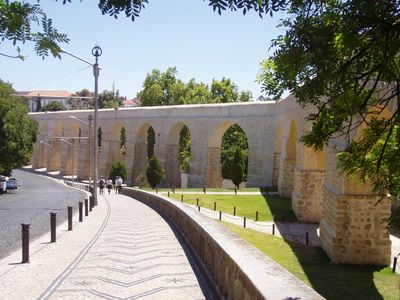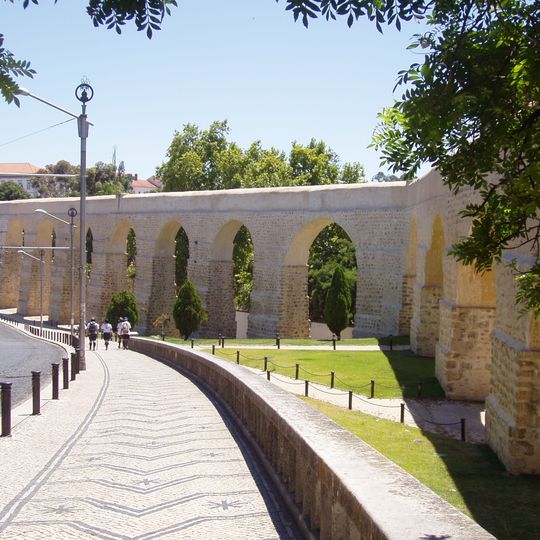
Aqueduto de São Sebastião, 16th century aqueduct in Sé Nova district, Coimbra, Portugal
The Aqueduto de São Sebastião is a stone arch structure that spans across the landscape with approximately twenty arches supporting its length, connecting elevated areas of the city. The construction displays solid masonry work and engineering skill from the Renaissance period.
The aqueduct was built in the middle of the 16th century under a king who brought architects with Italian training to oversee the project. It replaced an older water system that no longer met the city's needs.
The arch on the south side displays a stone sculpture of Saint Sebastian, named after the king who commissioned the work. This figure reflects the religious imagery common in 16th century Portuguese construction.
The structure is best viewed from different angles by walking around the surrounding area and shifting perspective. Comfortable shoes are helpful since the area is hilly and multiple paths exist to explore the full length.
Few know that the structure contains a hidden water chamber beneath its arches that once served as a distribution point. This underground system allowed residents to direct water to different parts of the city.
The community of curious travelers
AroundUs brings together thousands of curated places, local tips, and hidden gems, enriched daily by 91,815 contributors worldwide.