Svobodnoye, Eneolithic settlement site in Adygea, Russia
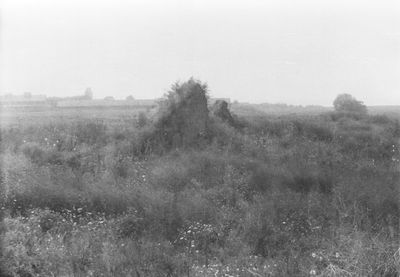
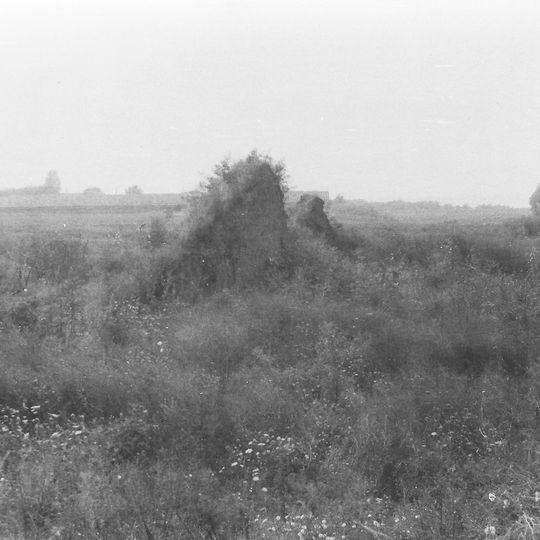
Svobodnoye is an Eneolithic settlement of the second half of the 5th to the early 4th millennium BCE, covering about 1 hectare on the left bank of the reed-choked Psenafa river near Krasnogvardeyskoye, Adygea. Its houses ringed an empty central area about 120 m across, and a 4–5 m deep ditch with an inner rampart enclosed it in its first phase.
The settlement dates to the second half of the 5th millennium BCE and the beginning of the 4th millennium BCE, belonging to the early Eneolithic of the Western Caucasus. It was discovered in 1981 by A. A. Nekhaev during excavations of the Bolshoi burial mound. The finds led to a revision of the chronology of pre-Maykop settlements and to the definition of a separate culture of incised pearl ceramics.
The site gave its name to a distinct culture of pricked pearl ceramics, defined after its excavation. Its potters pressed pearl-like bosses from the inside and rarely ornamented vessels, which were mostly pointed-bottomed. Among the finds are 18 flat ceramic female figurines and 30 reclining bull figurines.
The site lies near the village of Krasnogvardeyskoye, by a brick factory, on the left bank of the reed-choked Psenafa river; a dirt road runs along the river and has partly cut into the occupation layer. The excavated area is about 1 hectare, with a horseshoe layout around an open centre roughly 120 m across. The finds are in museum collections, not on display here.
Under the plough layer, above the settlement layer, two flat rectangular standing slabs of the Maykop culture were found side by side over the ditch. The settlement's cultural layer survived ploughing because it lies deeper than the arable horizon, though a dirt road along the river and a large modern rubbish pit cut into it.
The community of curious travelers
AroundUs brings together thousands of curated places, local tips, and hidden gems, enriched daily by 93,698 contributors worldwide.