Masjid al-Qiblatayn, Historic mosque in Medina, Saudi Arabia.
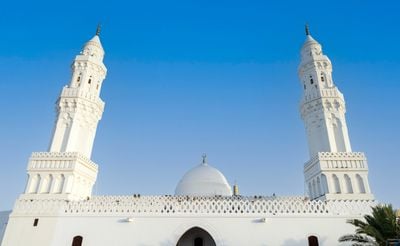
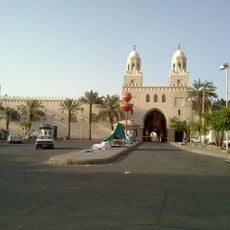
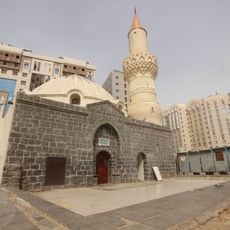
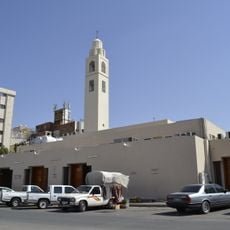
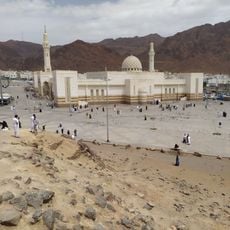
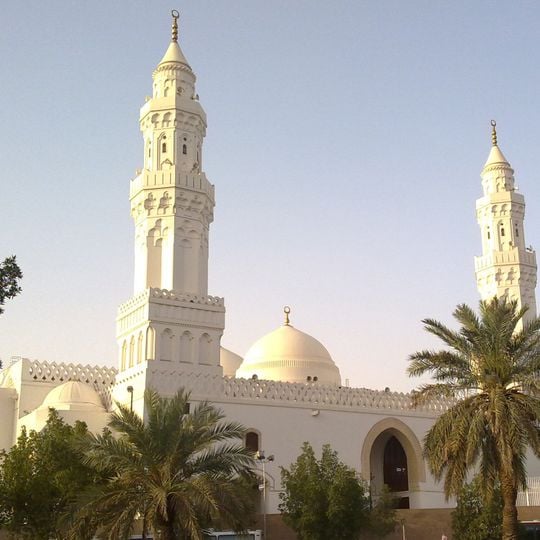
Masjid al-Qiblatayn is a white stone-and-stucco mosque on Khalid ibn al-Walid Road in northwest Medina, its flat roofline edged with small crenellations. Two slender tiered minarets with golden finials rise at the corners, and a smooth white dome sits centrally over the hall. The facade has arched windows and a pointed archway above a dark recessed door, with palms and compact trees in front.
Sawad ibn Ghanam ibn Ka'ab built the mosque in 2 AH (623 CE), among the earliest in Medina. On 15 Sha'ban of that year, during the Dhuhr prayer, Muhammad received the revelation to face the Kaaba instead of Jerusalem's Masjid al-Aqsa. Caliph Umar ibn al-Khattab maintained it, Suleiman the Magnificent rebuilt it, and King Fahd's 1987 reconstruction gave it its present form.
The name comes from the Arabic term for two prayer directions and recalls the moment when worshippers changed their orientation mid-prayer following instructions from Prophet Muhammad. Those who pray here today follow the same ritual practice as the first Muslims at this location, facing the Kaaba and expressing the unity of the community through their shared direction.
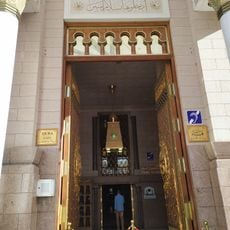
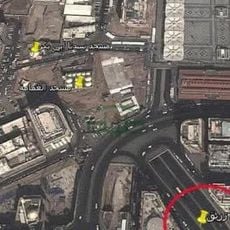
Access is from Khalid ibn al-Walid Road in the northwest district, where ample washing facilities for ritual purification before prayer are provided. The interior holds around two thousand people and sees the heaviest attendance during the five daily prayer times, with significantly fewer visitors between services.
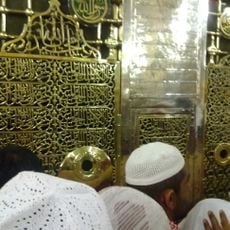
The Jerusalem-facing mihrab was removed in the 1987 reconstruction, but a small marker mihrab now stands in its place beneath a secondary false dome, linked to the main dome by a cross-vault that marks the shift from one qibla to the other. Below it sits a replica of the mihrab in the lower chamber of the Dome of the Rock.
The community of curious travelers
AroundUs brings together thousands of curated places, local tips, and hidden gems, enriched daily by 93,342 contributors worldwide.