Zül Huleyfe Mescidi, Sacred mosque in Medina, Saudi Arabia
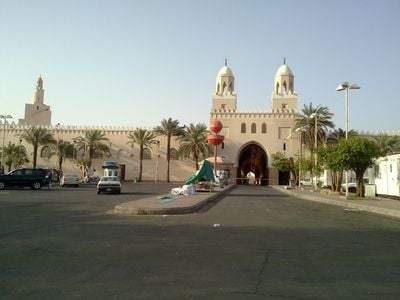
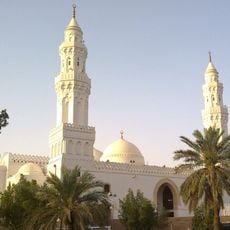
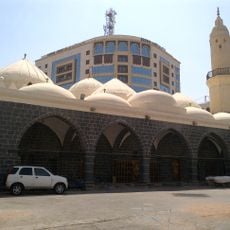
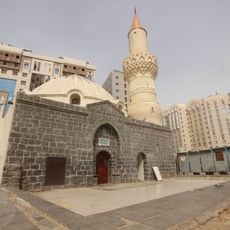
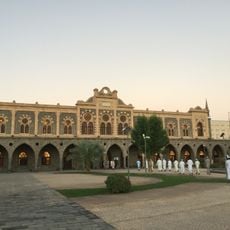
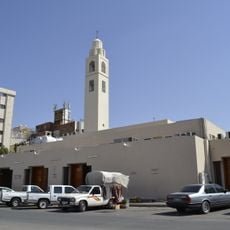
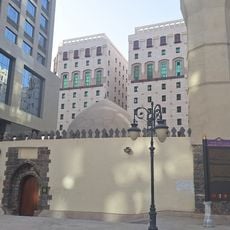
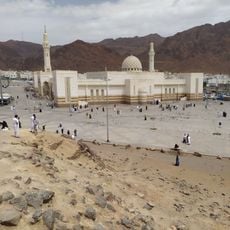
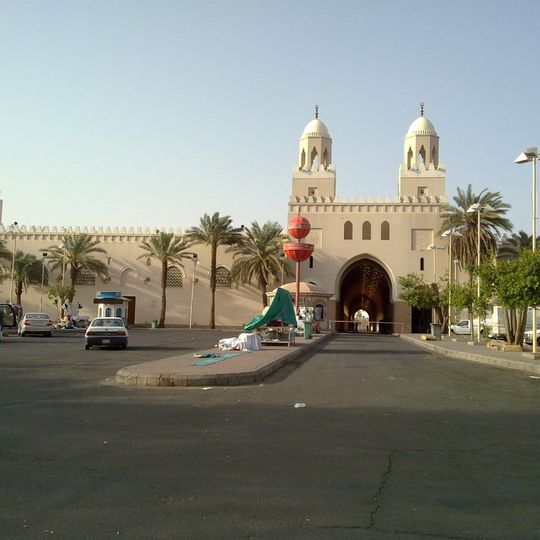
Masjid Dhul Hulayfah stands on the western side of Wadi al-Aqiq, about 12 to 14 kilometres from the Prophet's Mosque in Medina. The sand-coloured wall has a crenellated top and a central gatehouse with a dark arched entrance, three small arched windows above it and two domed square towers. Inside, two sets of arcades flank a courtyard of roughly 1,000 square metres, and a spiral-staircase minaret rises 62 metres.
The mosque was first built under Umar ibn Abd al-Aziz during his governorship of Medina (87–93 AH / 706–712 CE). It was renovated in the Abbasid era and again under Ottoman Sultan Muhammad IV (1058–1099 AH). Originally small and made of mud brick and stone, it was later rebuilt and expanded by order of King Faisal ibn Abd al-Aziz, and further enlarged in the reign of King Fahd.
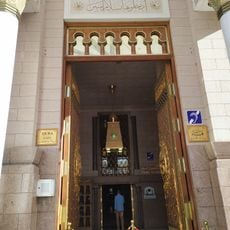
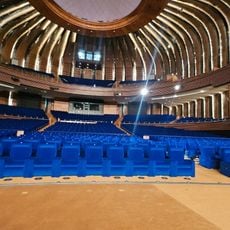
Also known as Abar Ali, the site serves as the place where people from Medina and nearby areas put on their pilgrim clothing before continuing onward. Visitors entering the prayer hall find worshippers from different regions preparing for the journey together.
Visitors to the complex find toilets, washing areas, and parking spaces available throughout the year. It is wise to arrive early in the morning or later in the evening when the flow of people is somewhat lighter.
The name Abiar Ali is often linked to Ali bin Dinar, the Darfur sultan who came here as a pilgrim in 1898, found the site in poor condition, dug wells for pilgrims and renovated the mosque. The name appears in sources written centuries before his birth.
The community of curious travelers
AroundUs brings together thousands of curated places, local tips, and hidden gems, enriched daily by 93,170 contributors worldwide.