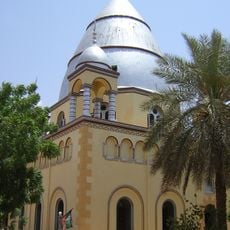
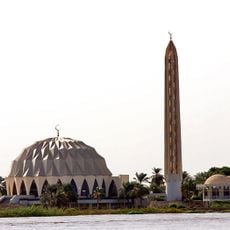
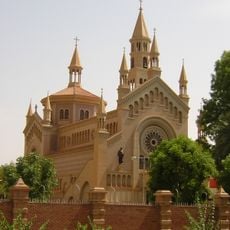
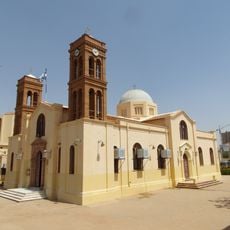
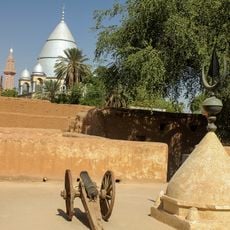
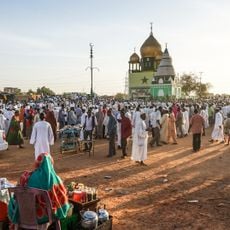
Farouq mosque, Khartoum, Islamic mosque in central Khartoum, Sudan
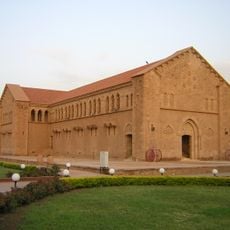
Farouq Mosque is an Islamic place of worship in central Khartoum featuring geometric patterns and multiple prayer halls for worshippers. The building contains several interior spaces designed to accommodate different groups of people during religious observances throughout the day.
The mosque's founding is attributed to the scholar Ahmed bin Ali Aon bin Amer (1600–1691), who moved from Tuti Island to the mainland; the first settlement of later Khartoum grew at this site. Khurshid Pasha enlarged it in 1829 during the Turkish era. King Faruq of Egypt rebuilt the present structure in 1947, giving it his name.
The mosque carries several names: Arbab al-Aqaid, Farouq Mosque and King Farouq Mosque. Its early complex of mosque and khalwa produced scholars who founded Khartoum districts, among them Sheikh Hamad wad Ammariyum (Hillet Hamad) and Sheikh Khogali Abu al-Jaz (Hillet Khogali). Sheikh Muhammad wad Dayf Allah, author of the "Tabaqat", is also linked to it.
The mosque experiences peak activity during Friday prayers when significantly more people gather, so it is busier at those times than on other days. Visitors should dress respectfully and follow local customs when entering the interior spaces.
The mosque's land endowments once included the site of the former Khartoum zoo, now occupied by the al-Fateh tower, and the land on which the Friendship Hall was built. The waqf is reported to earn about 4 billion annually, with under 10% spent on the mosque's staff and rites.
The community of curious travelers
AroundUs brings together thousands of curated places, local tips, and hidden gems, enriched daily by 93,469 contributors worldwide.