The Mahdi's tomb, tomb in Omdurman, Sudan
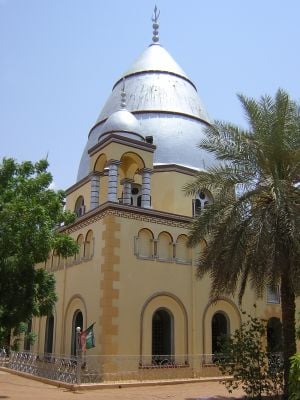
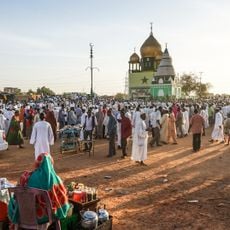
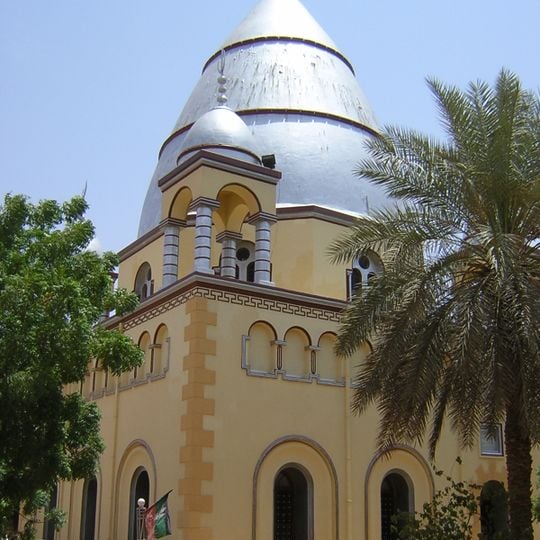
The Mahdi's tomb is a qubba in central Omdurman: a pale yellow, roughly octagonal body with recessed arched windows and tall arched doorways, topped by a silver-grey conical dome with a pointed finial. A smaller silver dome on a square tower with open arched sides and grey-and-white striped corner columns rises beside it. The interior holds a large brown wooden box with the Mahdi's remains, surrounded by a wooden barrier.
The Khalifa Abdullahi ordered the tomb built in 1885, the year Muhammad Ahmad died, on the spot where the Mahdi had settled after the fall of Khartoum. Kitchener's gunboats shelled the dome in 1898 and the Mahdi's body was disinterred. The tomb was rebuilt under the Mahdi's son Abd al-Rahman, completed around 1947.
The building is a qubba, the Sudanese term for a saint's tomb, and pilgrims visit it as they do other qubbas of holy men, seeking blessing and intercession. Its political role as a symbol of the Mahdist state faded after 1898, and it now stands mainly as a historical monument. Inside, a large brown wooden box holding the Mahdi's remains fills most of the room, decorated with Quranic verses and surrounded by a wooden fence.
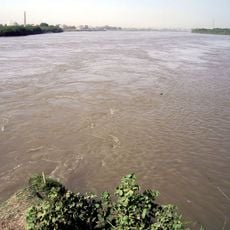
The tomb stands in central Omdurman, about a kilometre from the west bank of the White Nile, beside the Khalifa House Museum and the Khalifa's mosque. The compound is entered through an iron gate and the burial chamber is fenced off from visitors. The silver-grey conical dome rises seven metres above the octagonal base.
Decorative brass pieces were removed from the structure during the 1898 military campaign and are now held in British museums, including a military history museum. These scattered artifacts serve as reminders of the colonial period and are preserved far from their original home.
The community of curious travelers
AroundUs brings together thousands of curated places, local tips, and hidden gems, enriched daily by 93,359 contributors worldwide.