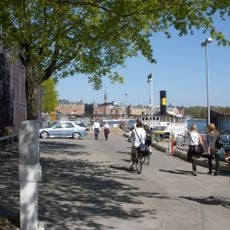
Museum of Far Eastern Antiquities, Art museum on Skeppsholmen, Stockholm, Sweden.
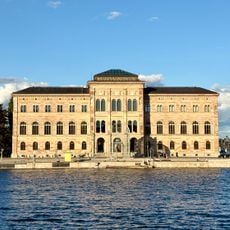
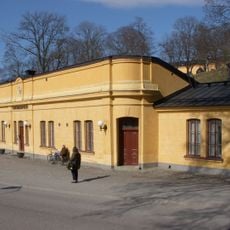
The Museum of Far Eastern Antiquities is housed in a former military building on Skeppsholmen island in Stockholm and displays objects from China, Japan, Korea, and India. The collection includes sculptures, ceramics, decorative arts, and armor organized by region and cultural tradition.
The museum was established in 1926 when Sweden decided to build a comprehensive collection focused on Far Eastern archaeology and art. Its first director, a prominent archaeologist, gathered objects from excavations in China and shaped it into a research institution.
The museum's name in Swedish, Östasiatiska museet, is still paired with its original English title from 1926. Its annual journal, the Bulletin of the Museum of Far Eastern Antiquities, publishes research on ancient East Asia. The core of the collection comes from Johan Gunnar Andersson's 1920s discoveries in China, which revealed a previously unknown East Asian prehistory.
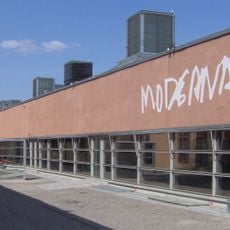
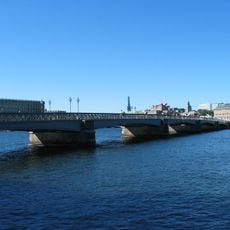
The museum occupies Tyghuset, the navy's former ordnance store on Skeppsholmen, next to Moderna museet and Skeppsholmskyrkan. The entrance faces Tyghusplan; the island is reached on foot from Kungsträdgården via the Skeppsholmen bridge. A rock cavern of 4,800 m² beneath the building, fitted out in 2010 as a exhibition hall, hosted 315 Terracotta Army objects in winter 2010/2011.
The museum publishes the Bulletin of the Museum of Far Eastern Antiquities (BMFEA), an annual journal on ancient East Asia; its last full collection catalogue appeared in 1963. Beneath the building lies a 4,800 m² rock shelter built in the early 1940s for the naval chief and his staff in wartime, later used for exhibitions.
The community of curious travelers
AroundUs brings together thousands of curated places, local tips, and hidden gems, enriched daily by 95,329 contributors worldwide.